-
Supreme Court


Undertaking To Perform Marriage Due To Threats Of Criminal Prosecution Under Charges Of Rape Unenforceable, Criminal Prosecution Cannot Be Reduced To Strong-Arm Tactic: Supreme Court Of India Quashes Rape Case Filed After 3 Years Of Consensual Relationship
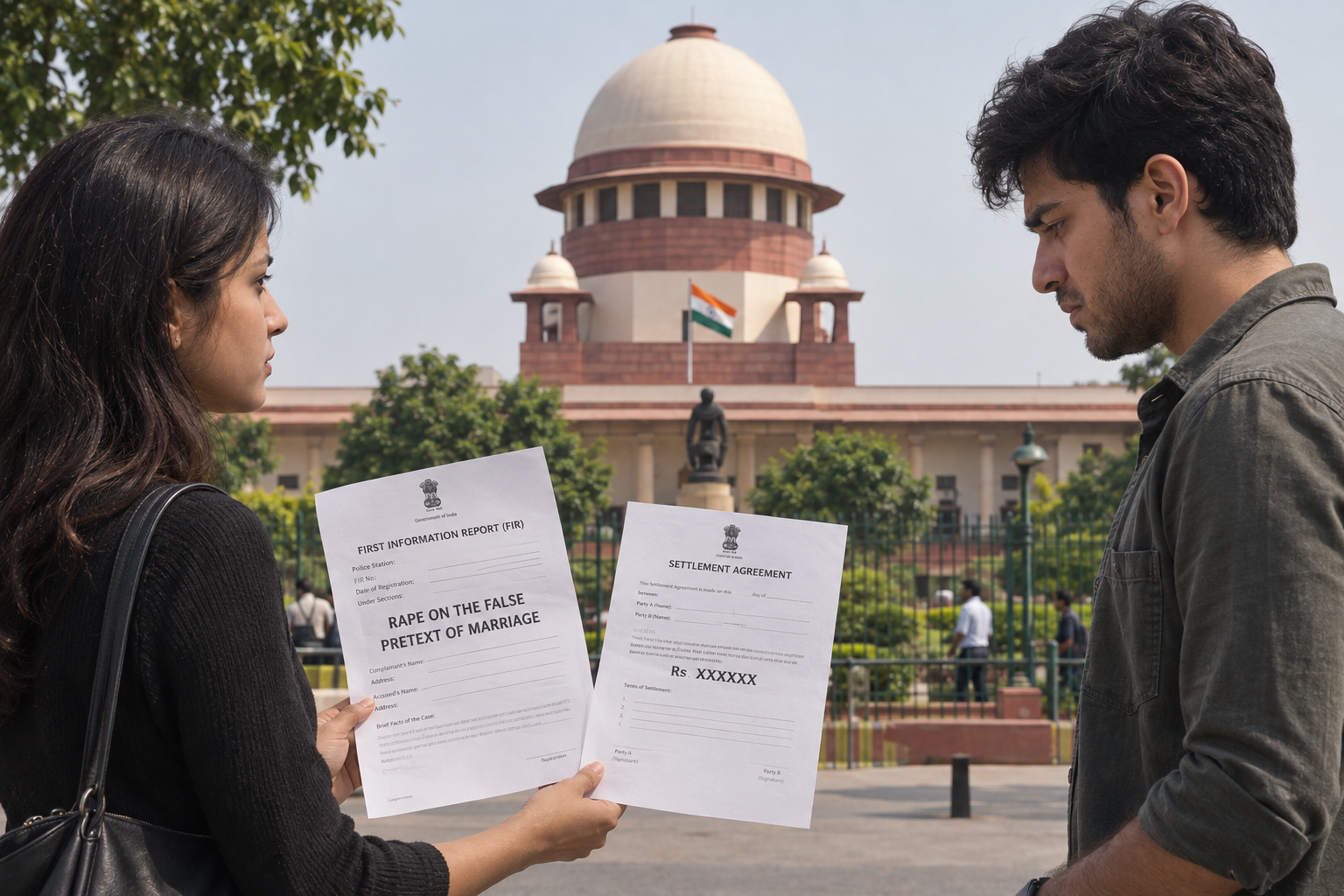
In Martanda Singh v. State of Chhattisgarh & Anr., Supreme Court quashed criminal proceedings against a man accused of rape on the false pretext of marriage after 3 years of a relationship, holding that facts did not disclose that woman’s consent was obtained through coercion or misconception of fact, but that parties had been in a consensual relationship.
The complainant, an engineering graduate preparing for competitive examinations, had met the appellant at an academy. They subsequently fell in love, disclosed their relationship to their respective families, and discussed the possibility of marriage. The appellant visited the complainant at her residence, where she lived with her mother and brother, and a physical relationship developed between them.
According to allegations, appellant sexually exploited the complainant under the pretext of marriage and subsequently refused to marry her. The physical relationship continued for about 3 years before the parties separated. Thereafter, a marriage proposal discussed between the families also failed to materialise, following which the complainant lodged an FIR in 2025 and a chargesheet was subsequently filed.

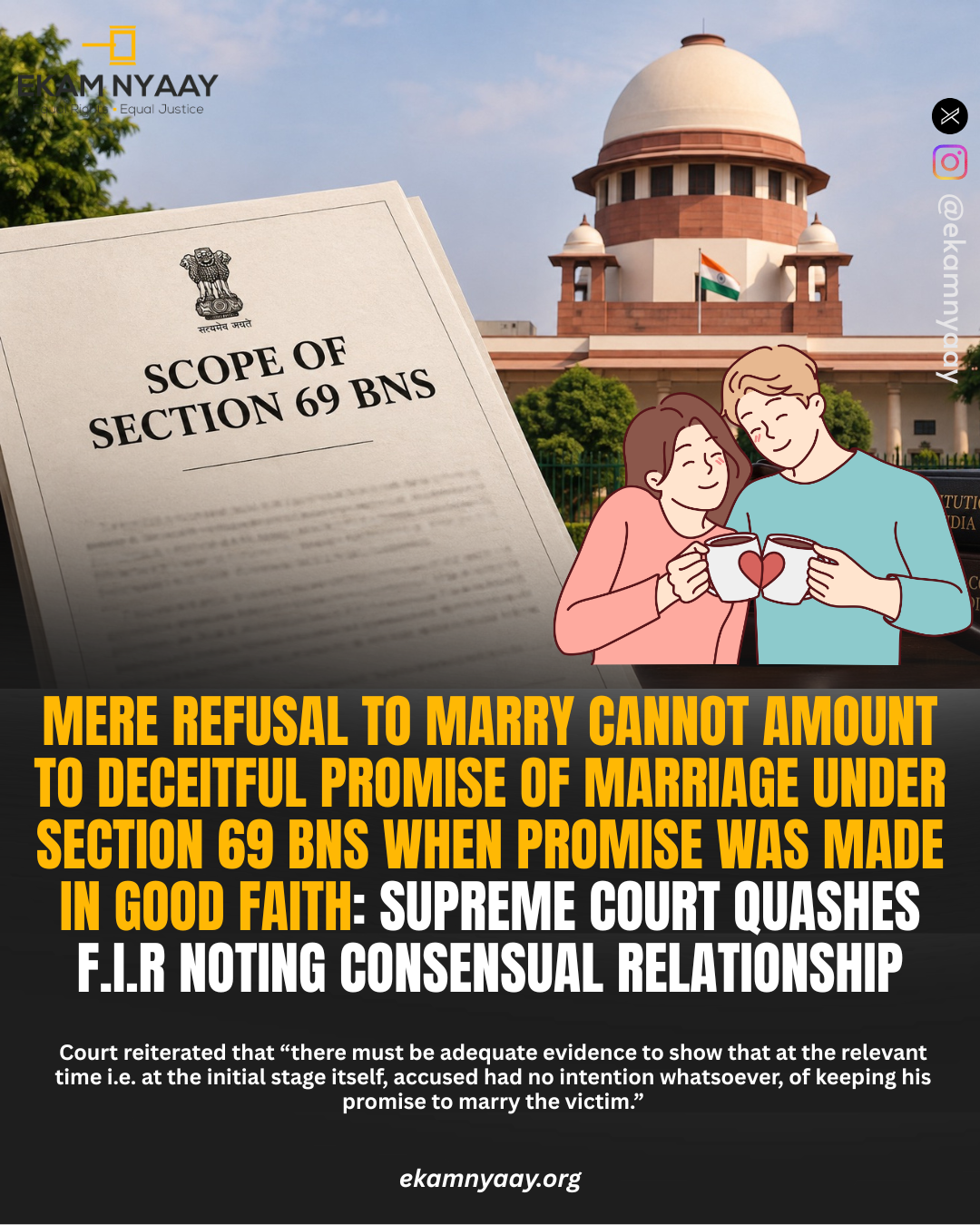
Supreme Court examined whether the consent for the physical relationship could be treated as consent obtained under a misconception of fact merely because the proposed marriage ultimately did not take place. Relying upon Deepak Gulati v. State of Haryana, Court reiterated that there must be material demonstrating that the accused had no intention to marry from the very beginning.
Court also noted that parties had continued their relationship for around 3 years and their families had also discussed marriage. While considering the allegation that appellant used to visit the complainant when her mother was away, Court remarked, “obviously, the information that the mother has left, was passed on by the complainant herself, since we cannot presume that the appellant had mounted a constant surveillance of the complainant’s house for this purpose.”
Court further considered complainant’s assertion that appellant had agreed to marry her during counselling proceedings before Mahila Thana Counselling Centre, Bilaspur. However, it rejected the contention that such an undertaking could itself constitute a promise to marry and observed, “the undertaking would have been on the threat of criminal prosecution, which even otherwise is unenforceable.”
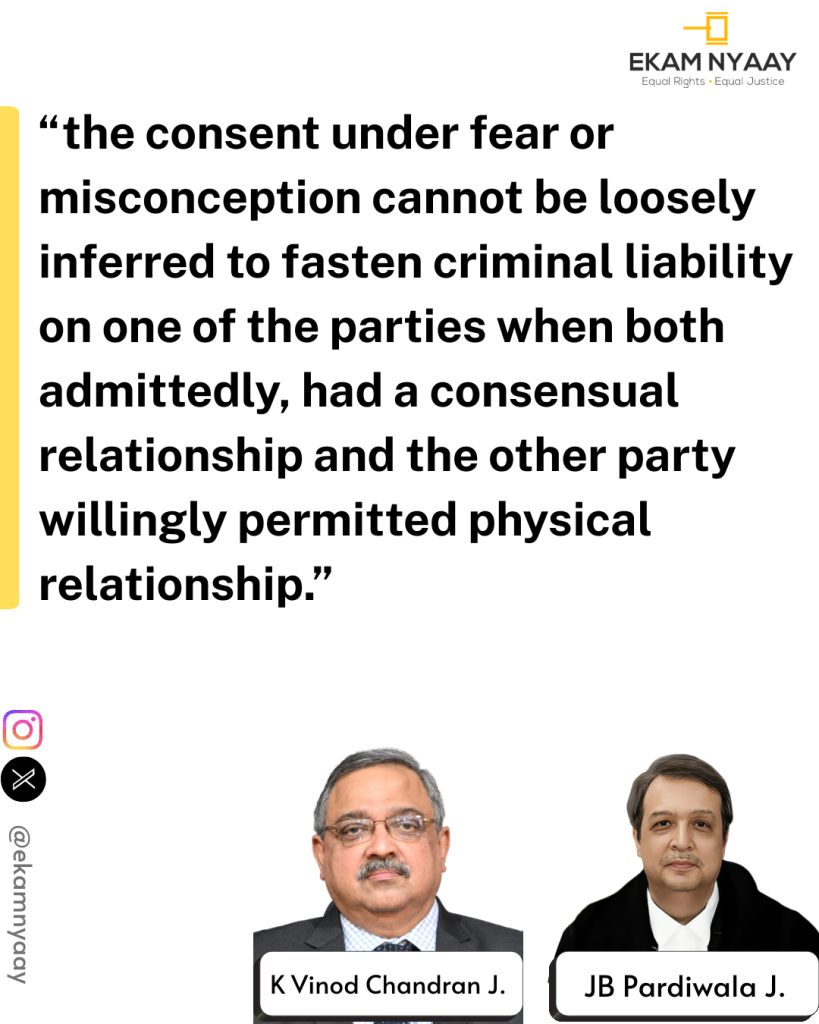
Reiterating the principles laid down in Deepak Gulati, SC cautioned against casually converting a failed relationship into criminal liability. It further found that even on a bare reading of the complaint, “there is no clear assurance or a promise made of marriage.”
Accordingly, Court held that consent could not be characterised as having been obtained through coercion or misrepresentation. Therefore, Court quashed the chargesheet and directed that no further proceedings be taken against the appellant.