-
Supreme Court


Supreme Court: Married Woman Cannot Claim Rape on the False Promise of Marriage. Quashes FIR Against an Advocate Filed by a Married Woman Advocate with a 11 Year-old Son.
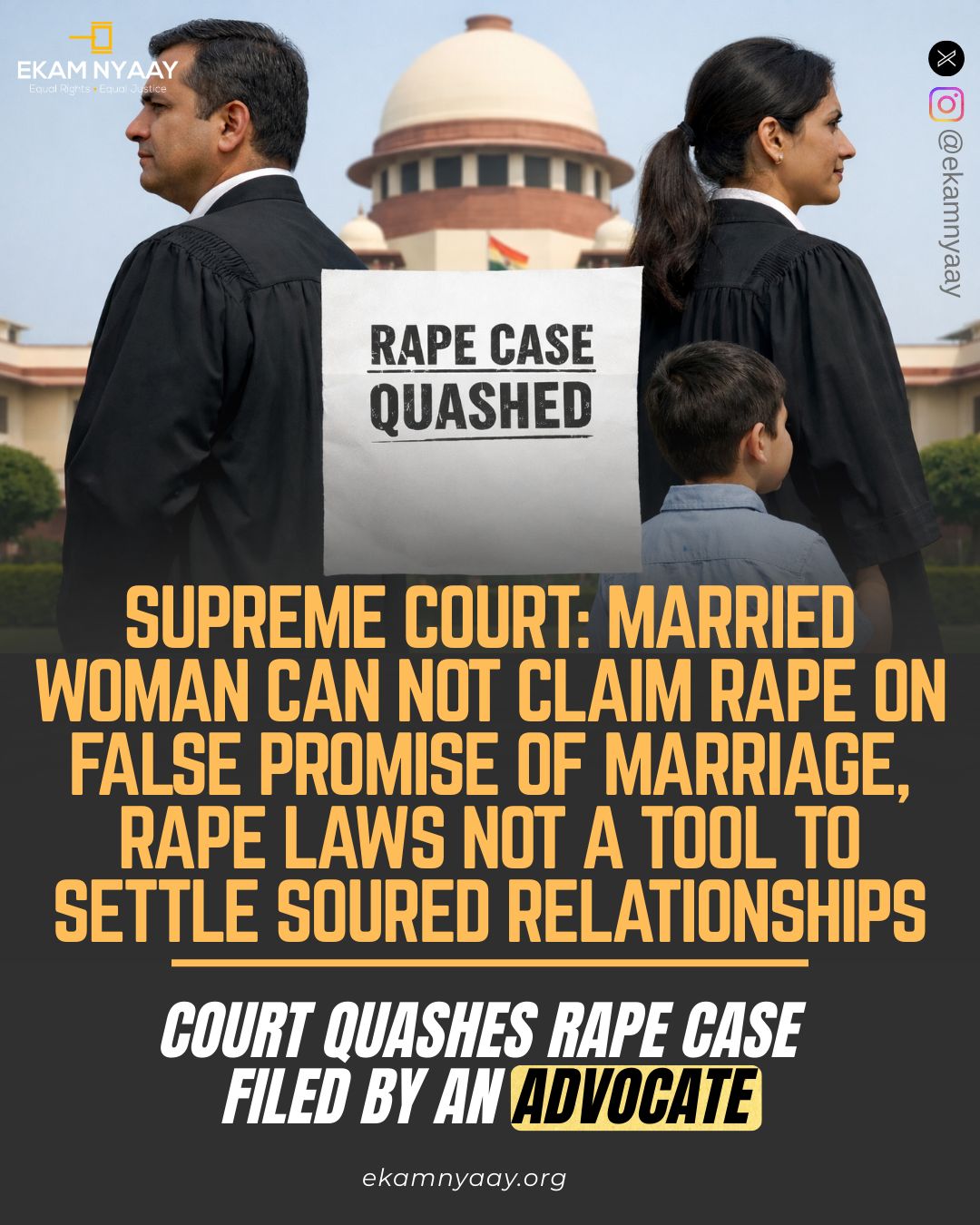
In Pramod Kumar Navratna v. State of Chhattisgarh & Ors., Supreme Court quashed an FIR u/s 376(2)(n) IPC lodged against an advocate by a married woman, who is also an advocate and has an 11-year-old son, alleging repeated rape on the false promise of marriage.
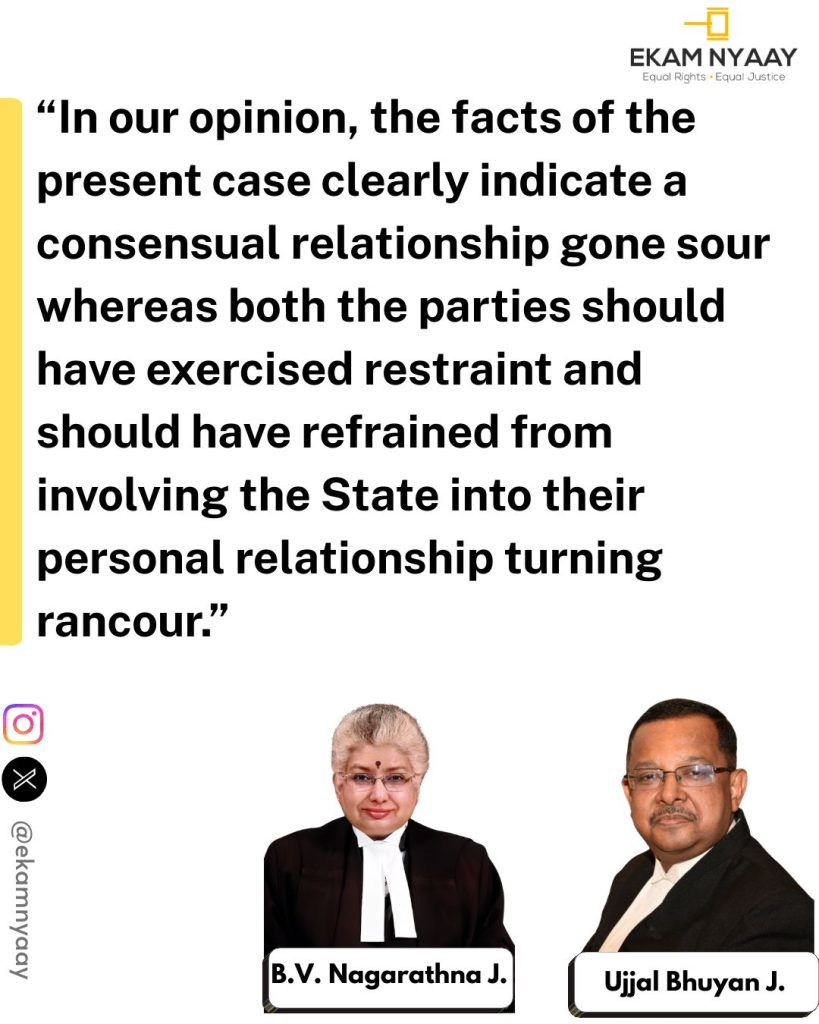
Court observed, “It is difficult to accept the view that the complainant, who herself is an advocate, was oblivious to the said settled position of law and hence was duped and induced…”
The complainant had married in 2011 and had a son from the wedlock. Due to matrimonial discord, her husband filed a divorce petition, which was dismissed by Family Court, and a matrimonial appeal was pending. Thus, during her relationship with the petitioner, she was in a subsisting marriage.
According to the complainant, she developed a relationship with the accused advocate in September 2022, which continued until January 2025. She alleged repeated sexual relations based on assurances of marriage, resulting in pregnancy and an abortion. After disputes with the accused and his family, she lodged the FIR alleging rape.
Supreme Court reiterated the settled legal position that not every sexual relationship based on a promise of marriage amounts to rape. A rape charge can be sustained only where the promise to marry was false from the very inception and made solely to obtain sexual consent. It emphasised that a breach of promise is not the same as a false promise under criminal law.
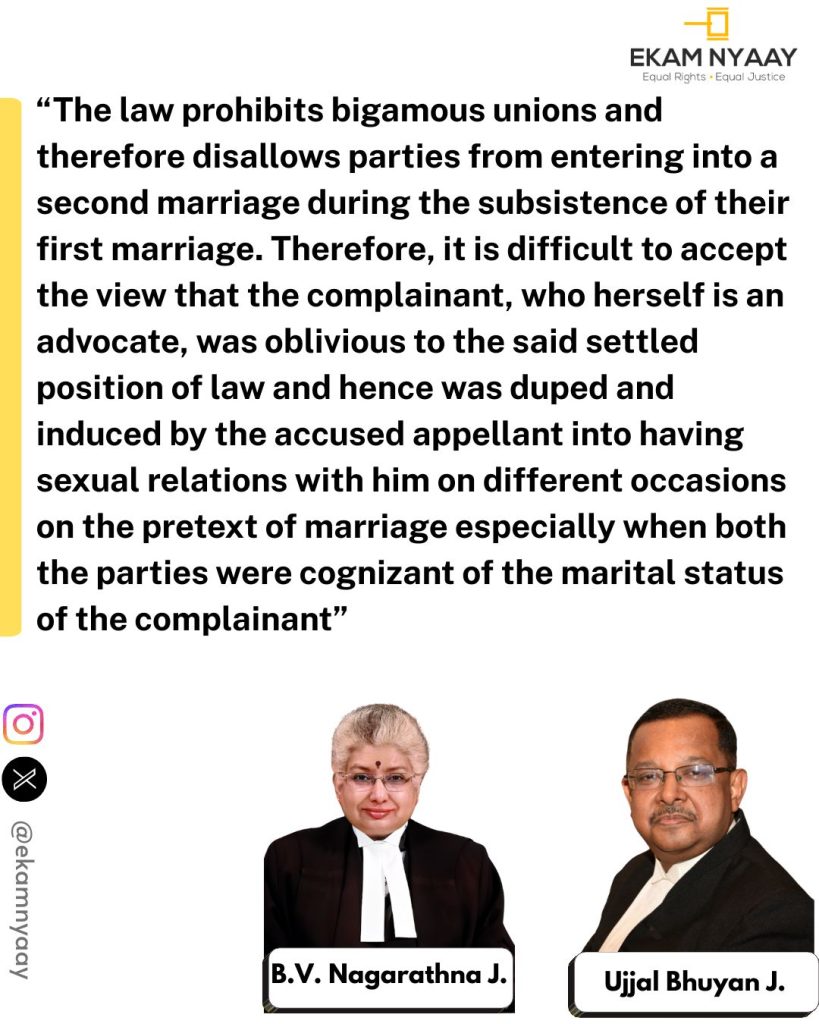
Court further held that even assuming a promise of marriage was made, it was legally impossible to perform, since the complainant was already married. Referring to Section 5(i) HMA, Court observed, “Such a promise would not be legally enforceable or even capable of being acted upon as the victim herself was not eligible for marriage…”
Court also rejected the claim that complainant was deceived, noting that both parties were advocates and fully aware of the complainant’s marital status from the outset. It found it implausible that a legally trained, 33-year-old woman could be induced into believing in a valid promise of marriage when the law clearly prohibited such a marriage.
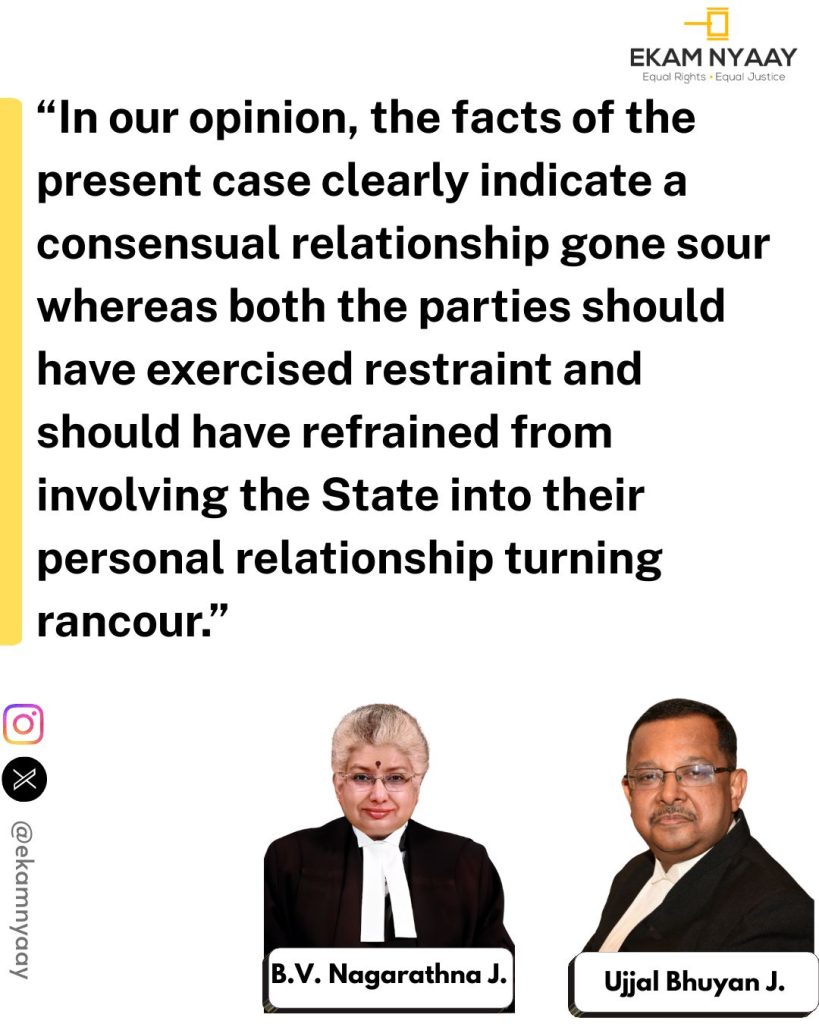
Court cautioned against the growing tendency to criminalise failed or broken relationships. It stressed that rape law must be reserved for cases involving absence of consent, coercion, or deception of a grave nature, and should not be invoked merely because a consensual relationship later turns bitter.
Therefore, Court held that even if the allegations were taken at face value, no offence u/s 376(2)(n) IPC was made out. Accordingly, Supreme Court quashed the FIR, chargesheet, and all consequential proceedings.