-
Supreme Court

SC: 120 Crore Jewellery, 50 Crore Gold Biscuits: SC Expresses Shock at Claims by Wife, Dissolves Marriage & Quashes DV Proceedings Initiated After Mediation Settlement.
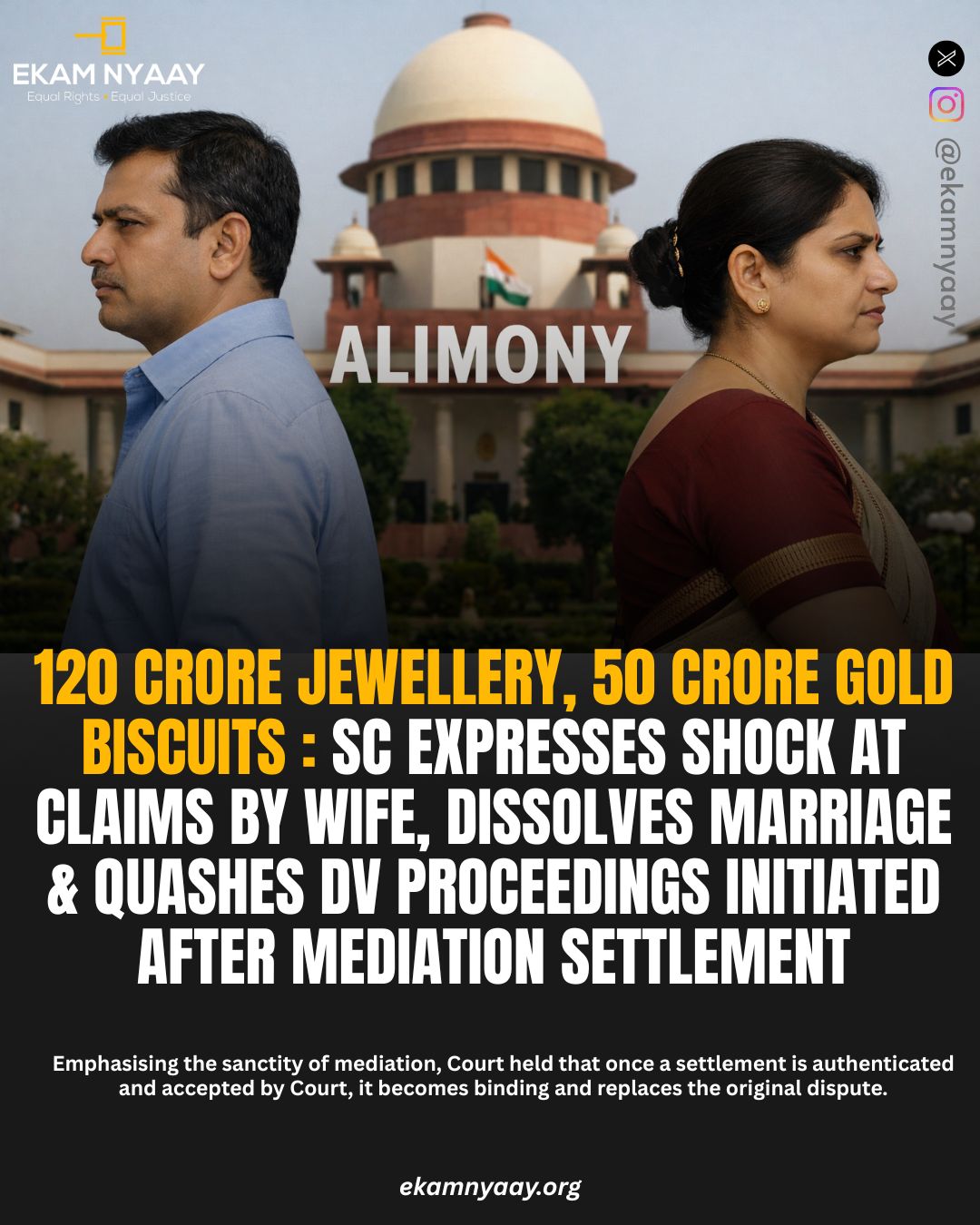
In Dhananjay Rathi v. Ruchika Rathi, SC held that while a spouse retains the statutory right to withdraw consent before the grant of a decree of divorce by mutual consent, such withdrawal cannot be permitted where the parties have already entered into a binding mediation settlement resolving all disputes.
The case arose from matrimonial disputes between the parties, who were married in 2000 and began living separately around 2022–23. The husband filed a divorce petition, and the matter was referred to mediation, culminating in a Settlement Agreement, wherein both parties agreed to dissolve their marriage by mutual consent and settle all claims.
As per the settlement, husband agreed to pay ₹1.5 cr in 2 instalments, ₹14 lakh for a car, and return jewellery, while wife agreed to transfer ₹2.52 cr to husband and refrain from initiating any future litigation. The agreement was duly acted upon, payments were made, property arrangements were executed, and the first motion for divorce was allowed by Family Court.
However, before second motion, wife withdrew her consent for mutual divorce and subsequently initiated proceedings under DV Act. The husband challenged this before Delhi HC, which allowed the continuation of DV proceedings subject to certain conditions, leading to the present appeal before SC.
Supreme Court clarified the legal position regarding withdrawal of consent in mutual divorce and acknowledged the general rule but carved out a crucial limitation.
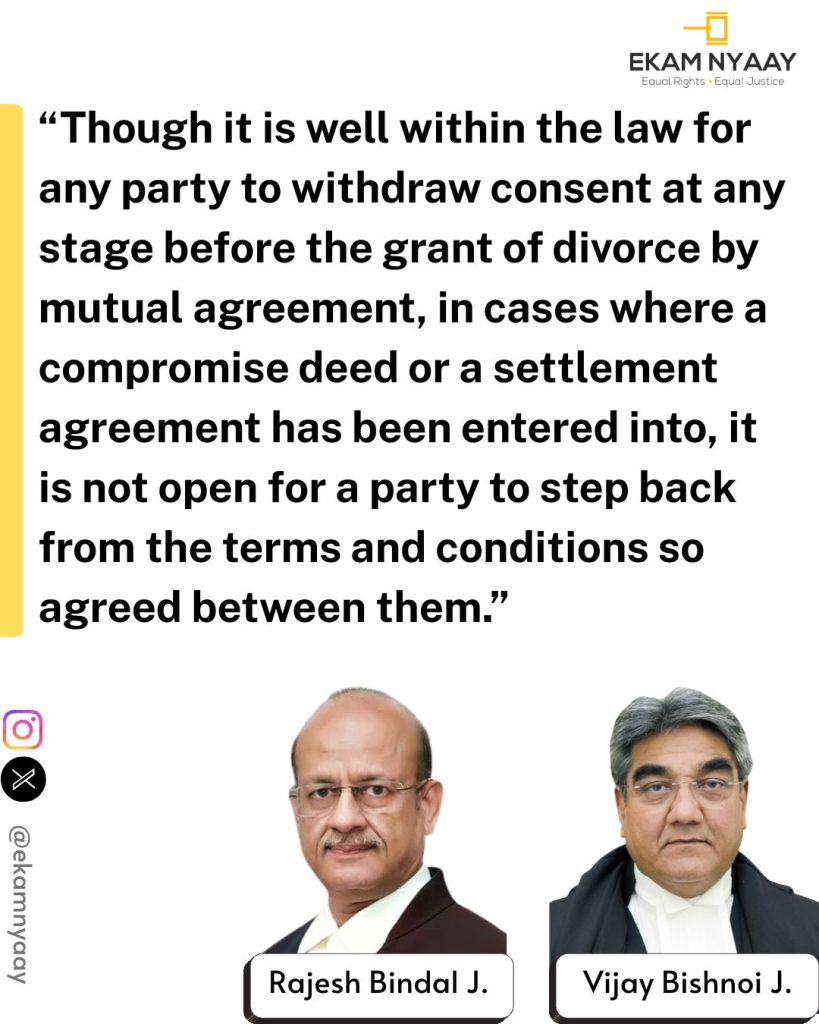
Emphasising the sanctity of mediation, Court held that once a settlement is authenticated and accepted by Court, it becomes binding and replaces the original dispute.
Court also rejected the wife’s justification that additional unrecorded promises (₹120 crore worth of jewellery and ₹50 crore in gold biscuits) were made and that the husband failed to fulfil them, which led her to refuse to sign the second motion.
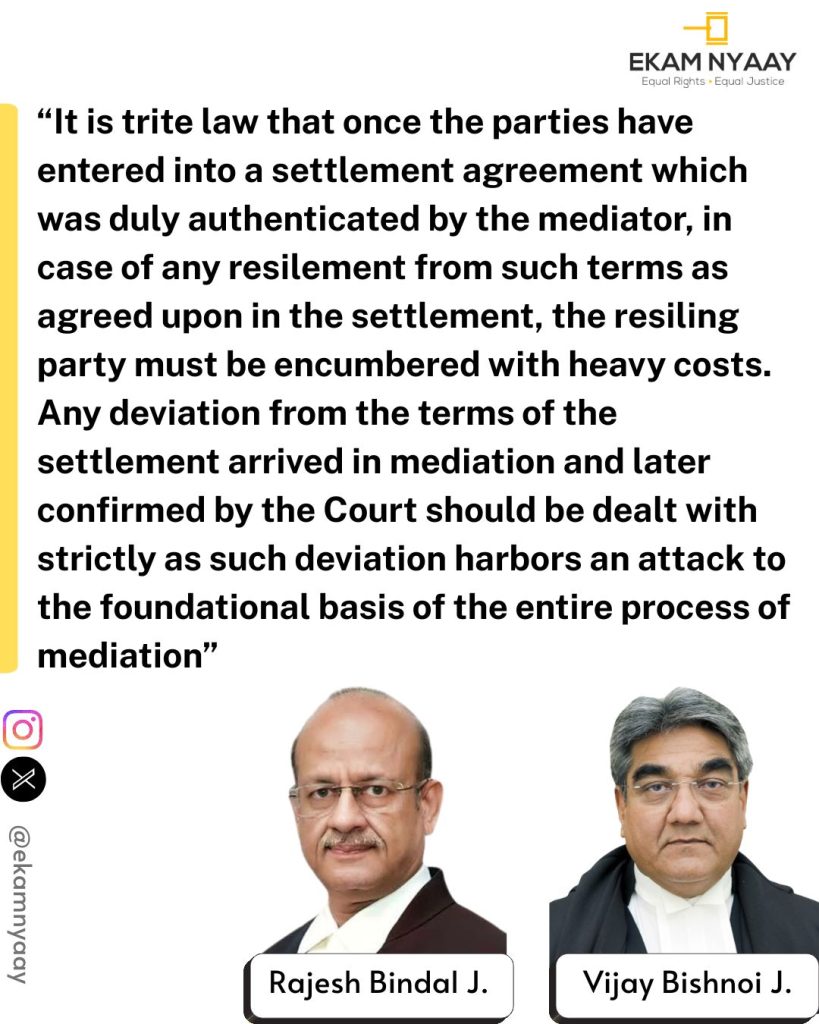
Regarding DV Act proceedings, Court held them to be an abuse of process and an afterthought. It found no specific allegations of domestic violence and concluded that allowing such proceedings would amount to harassment and misuse of the law.
Therefore, invoking Article 142, Supreme Court held that the marriage had irretrievably broken down and granted a decree of divorce. It quashed DV proceedings, enforced the settlement terms, and directed the completion of the remaining financial obligations.
More In this segment
-
-
-
-
Supreme Court
- June 2026
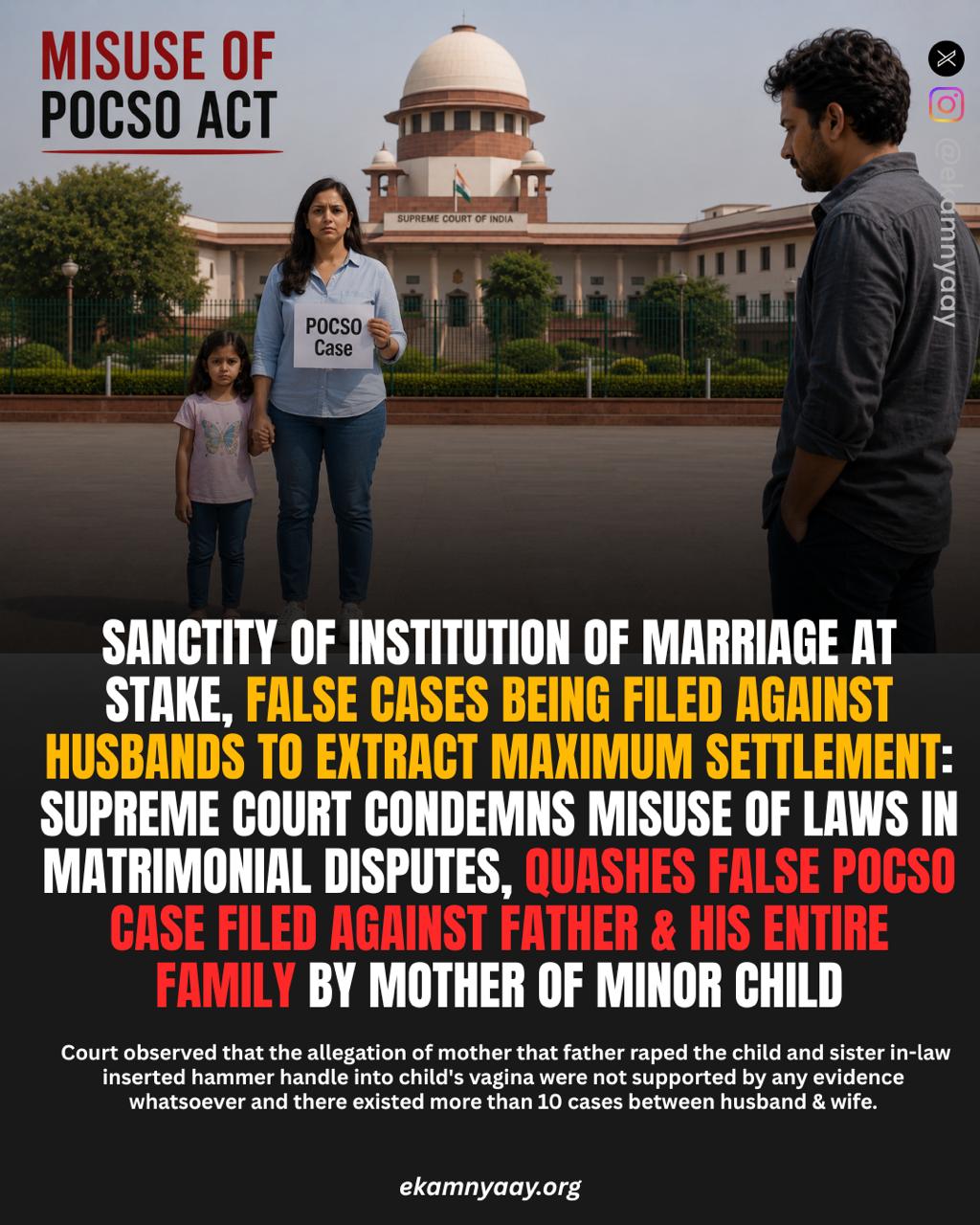
SC: False POCSO Case Filed Against Father and His Entire Family by Mother of Minor Child Quashed
-
-