-
Supreme Court
Supreme Court Dissolves Marriage Citing Irretrievable Breakdown. Laments Misuse of Courts to Settle Personal Scores.
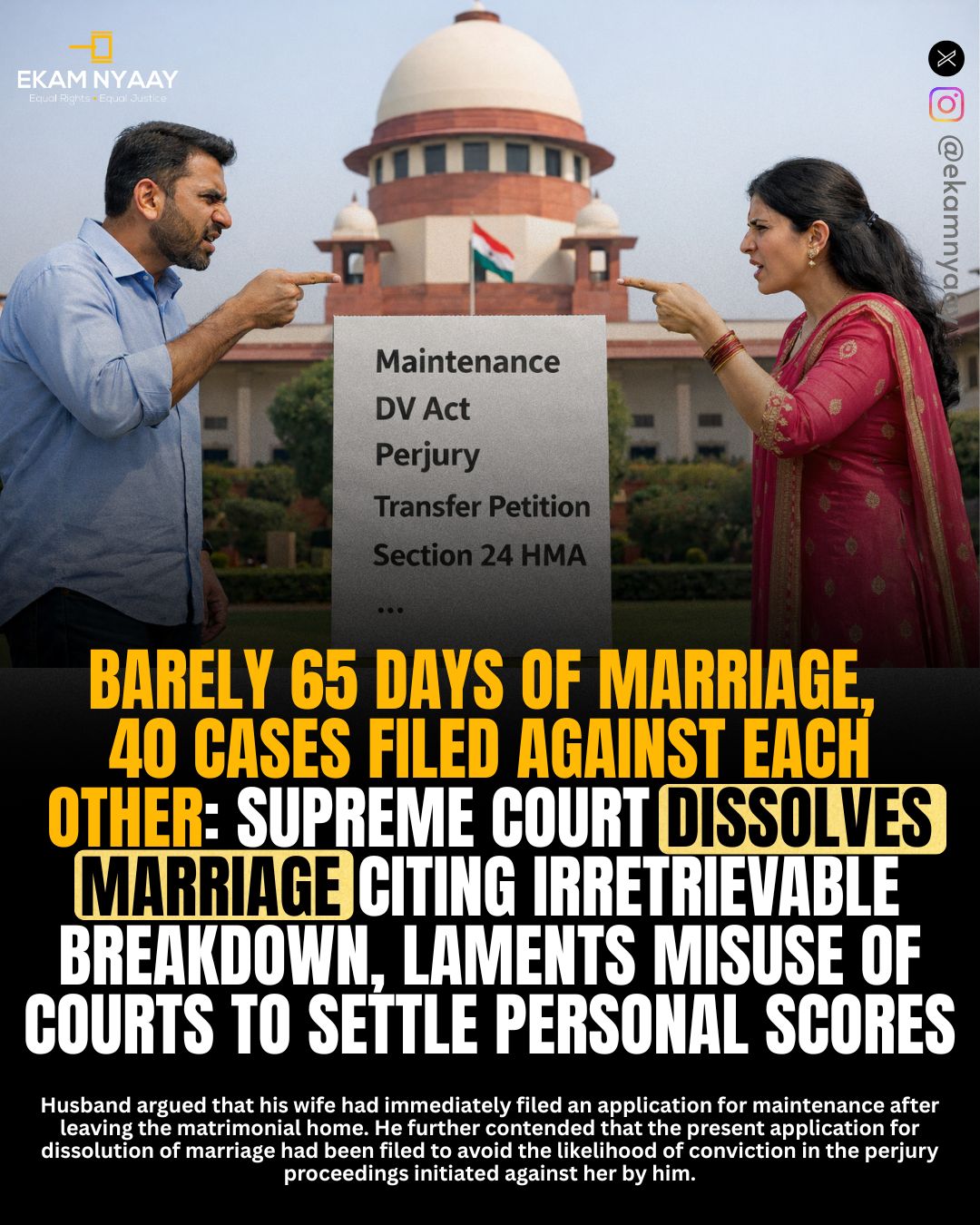
In Neha Lal v. Abhishek Kumar, Supreme Court allowed the application filed by wife seeking dissolution of marriage on the grounds of irretrievable breakdown noting that the couple got married in 2012 and stayed together only for 65 days and lodged more than 40 cases against each other.
Expressing anguish at how matrimonial litigation is often weaponised, Court remarked “Warring couples cannot be allowed to settle their scores by treating Courts as their battlefield and choke the system.”
The petition before Supreme Court arose from a transfer petition filed by the wife seeking transfer of a perjury application initiated by the husband. During the pendency of the transfer petition, the wife filed an application under Article 142 of the Constitution seeking dissolution of marriage. The marriage was solemnised on 28.01.2012, and it was undisputed that the parties had been living separately since 02.04.2012. Over the years, both sides initiated a barrage of civil and criminal proceedings across multiple forums.
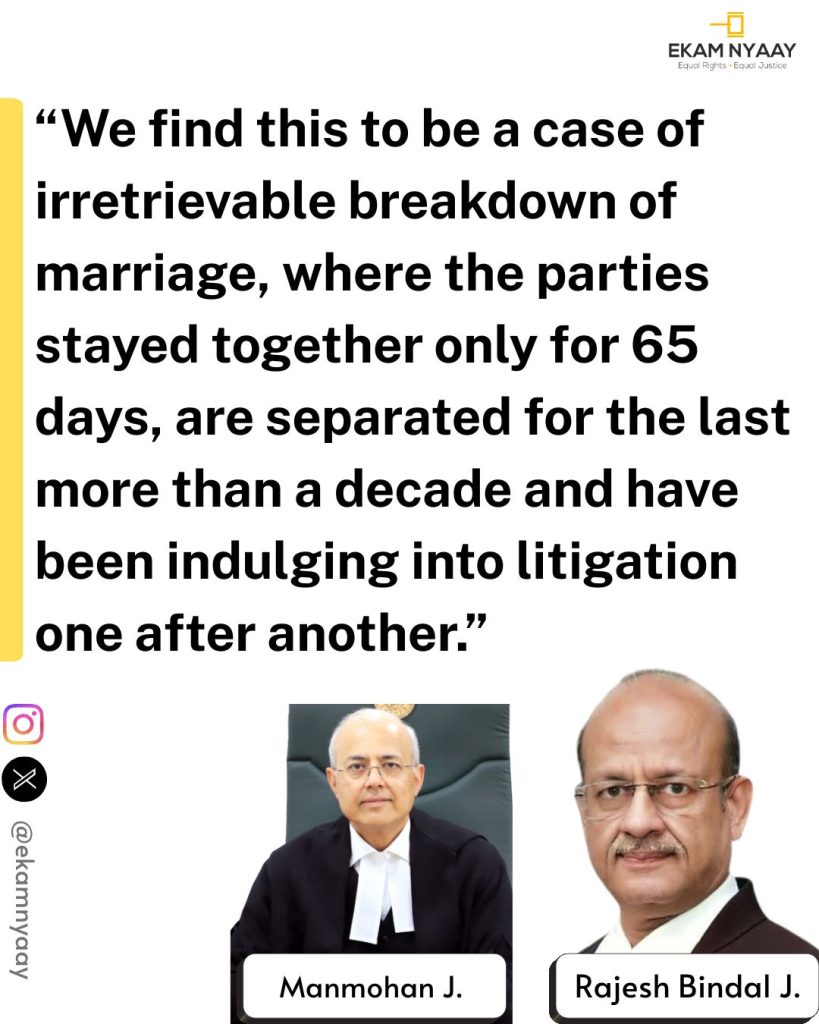
Court took note of an extraordinary volume of litigation, observing that the parties had “indulged into filing more than 40 cases against each other” across Family Courts, District Courts, High Courts, and even before the Supreme Court. These included divorce petitions, maintenance proceedings, domestic violence cases, criminal cases under Section 498A IPC, execution proceedings, perjury applications, writ petitions, and repeated transfer pleas. Court found that this relentless litigation had continued for more than a decade after a cohabitation of barely 65 days.
Although the parties sought reference to mediation before Supreme Court, the process could not effectively commence. Recording this failure, Court noted that despite the availability of mediation mechanisms, reconciliation efforts had not yielded any result.
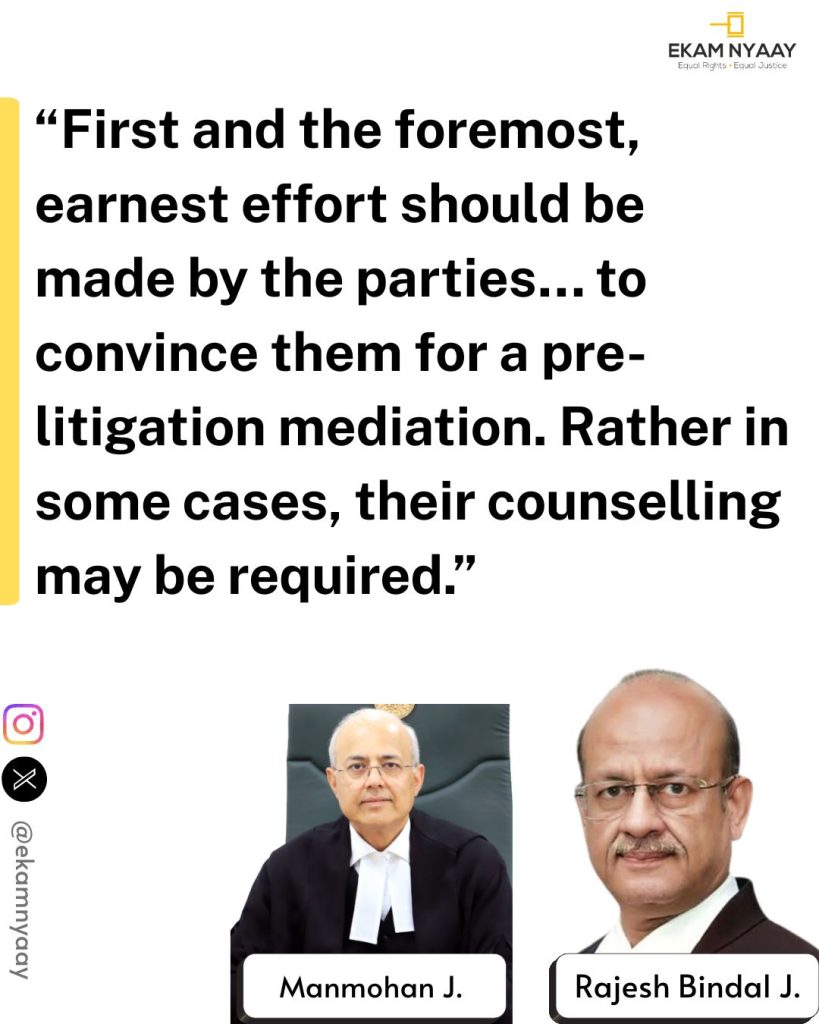
Court also expressed deep concern over the increasing tendency of spouses to convert matrimonial discord into prolonged legal warfare. Court observed,“In the changing times, the matrimonial litigation has increased manifolds… it is the duty of all concerned including the family members of the parties to make their earnest effort to resolve the disputes before any civil or criminal proceedings are launched.” It emphasised that premature criminalisation often destroys any remaining possibility of reconciliation.
Court further noted that even when cases like maintenance or domestic violence applications are filed, courts should first explore mediation instead of encouraging allegations and counter-allegations.
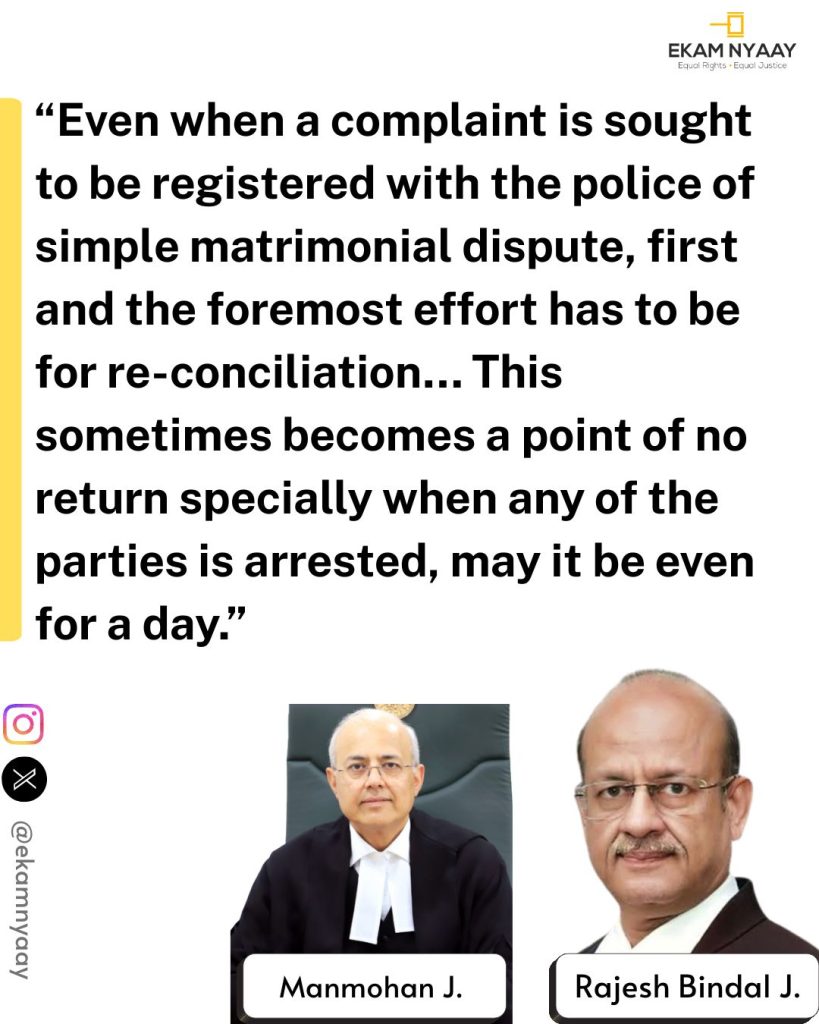
It also warned about false allegations and misuse of technology, stating that evidence is sometimes “even created, which is more often in the era of artificial intelligence. False allegations are rampant.” These practices, damage not just the parties but the justice delivery system itself.
Court found no possibility of reunion and held that continuation of the marriage would only prolong suffering. Therefore, invoking its extraordinary powers under Article 142, Supreme Court dissolved the marriage between the parties. It recorded that no alimony was claimed by the wife and that all prior claims stood settled.
Court also imposed costs of ₹10,000 on each party, observing that the cost was justified given the abuse of judicial process for over a decade.