
-
Supreme Court


Supreme Court criticizes the issuance of Bailable Warrants in Domestic Violence cases
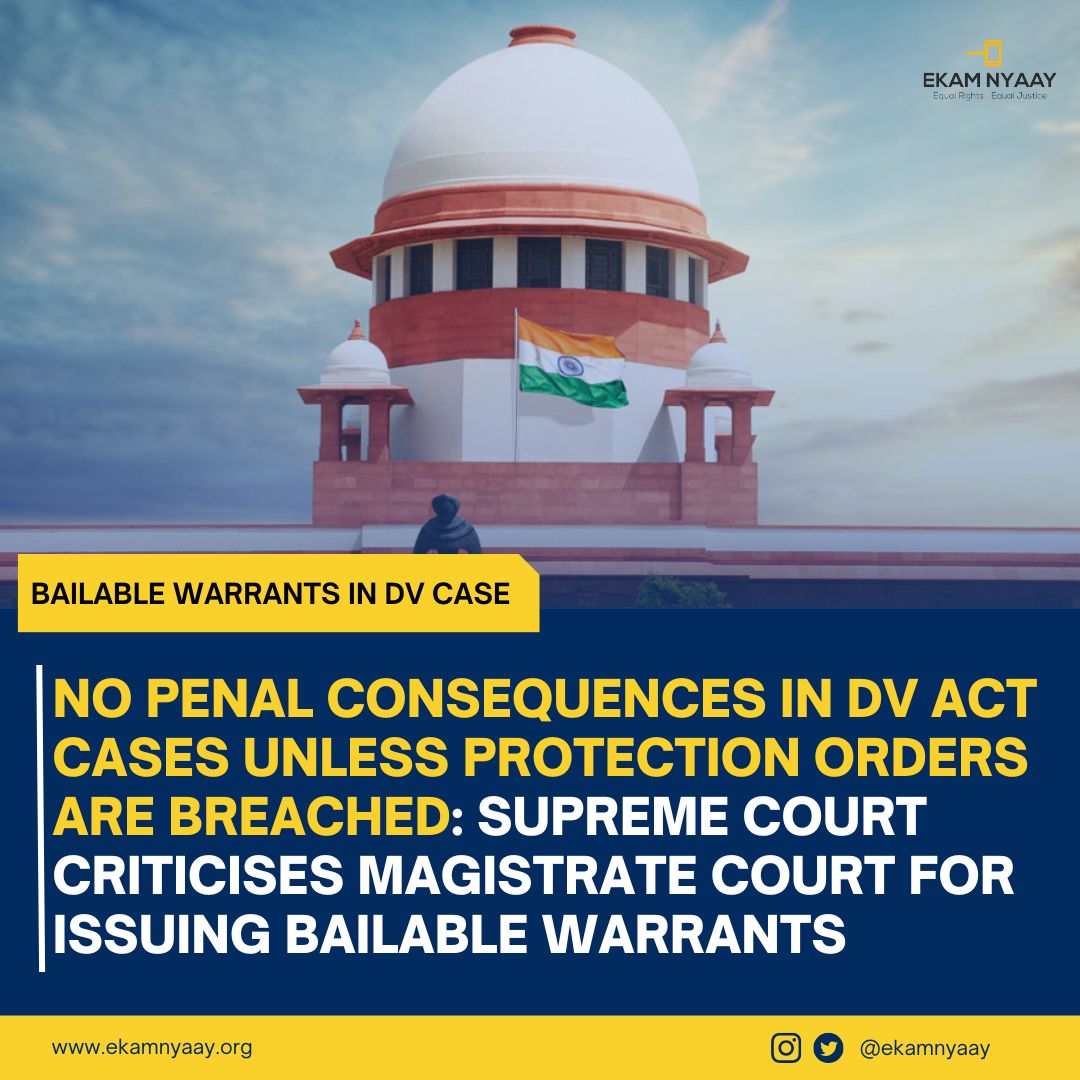
In Alisha Berry v. Neelam Berry, Supreme Court criticized the issuance of bailable warrants in domestic violence cases, emphasizing that such proceedings under DV Act do not lead to penal consequences unless there is a violation of a protection order.
Justice Sandeep Mehta, while dealing with a case involving the issuance of a bailable warrant by a magistrate court, observed that the trial court was unjustified in its action.
"This Court is constrained to observe that there is no justification whatsoever for the Trial Court to have issued bailable warrants in an application filed under the provisions of the D.V. Act. The proceedings under the D.V. Act are quasi-criminal proceedings which do not have any penal consequence except where there is a violation or breach of a protection order. Therefore, the learned Magistrate was absolutely unjustified in directing issuance of bailable warrants against the petitioner," Court stated.
The case involved a petition by a woman seeking to transfer a domestic violence case filed by her mother-in-law from the Metropolitan Magistrate, Tis Hazari Courts, Delhi, to the Chief Judicial Magistrate in Ludhiana.
The petitioner cited her challenges, including being unemployed, dependent on her father, and caring for a specially-abled minor son. She also highlighted the magistrate court's unjustified issuance of a bailable warrant against her.
Noting that divorce proceedings between the petitioner and her husband had already been transferred to a family court in Ludhiana, the Supreme Court allowed the transfer of the domestic violence case to Ludhiana.
It also directed that video conferencing facilities, if available, may be used for the convenience of the parties.
Citation : 2025 LiveLaw (SC) 33
More In this segment
-
-
Supreme Court
- June 2026
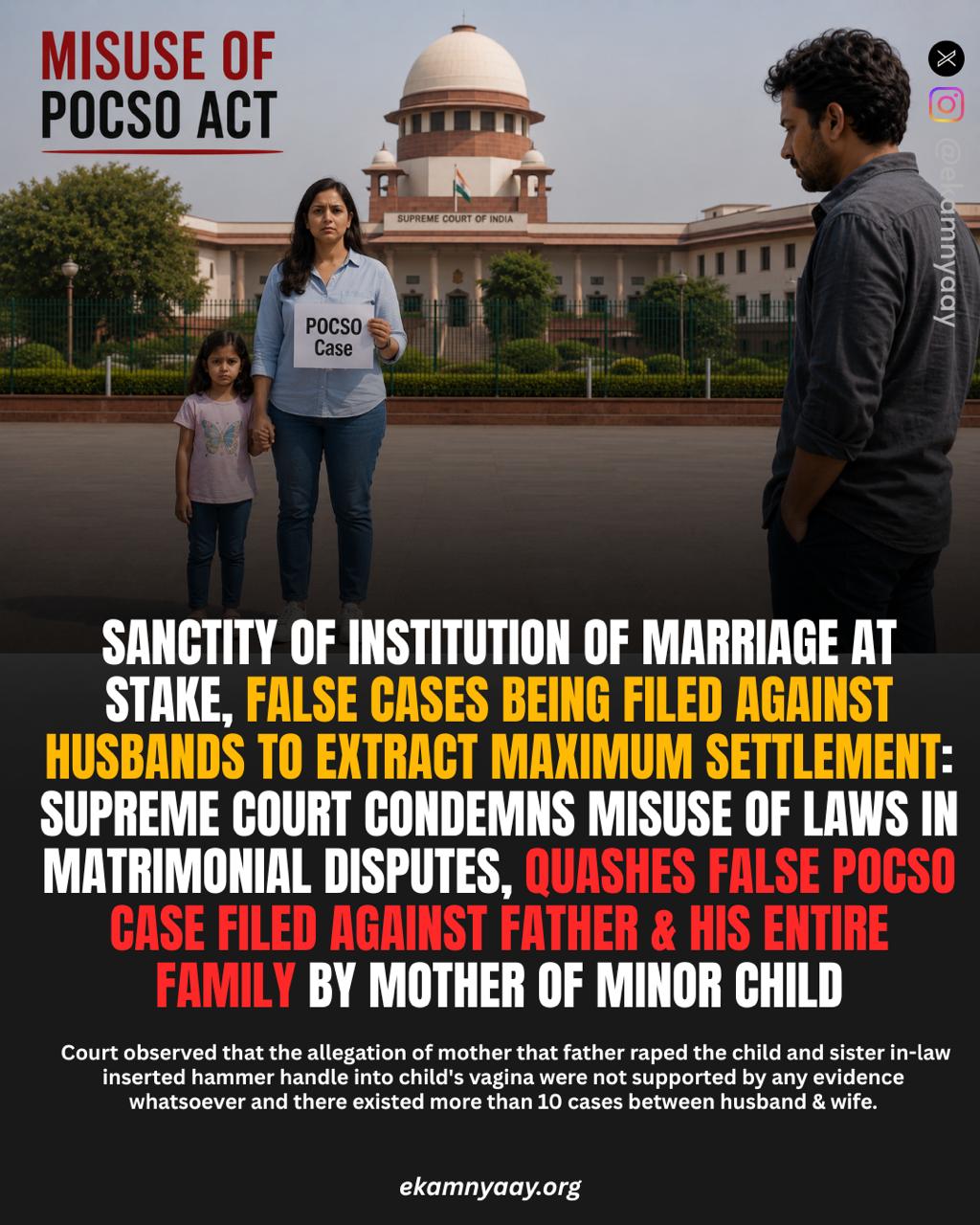
SC: False POCSO Case Filed Against Father and His Entire Family by Mother of Minor Child Quashed
-
-

-

-