-
High Court


J&K and Ladakh HC: Private Agreement of Separation by Mutual Consent Does Not Dissolve Marriage but Valid to Bar Maintenance U/S 125
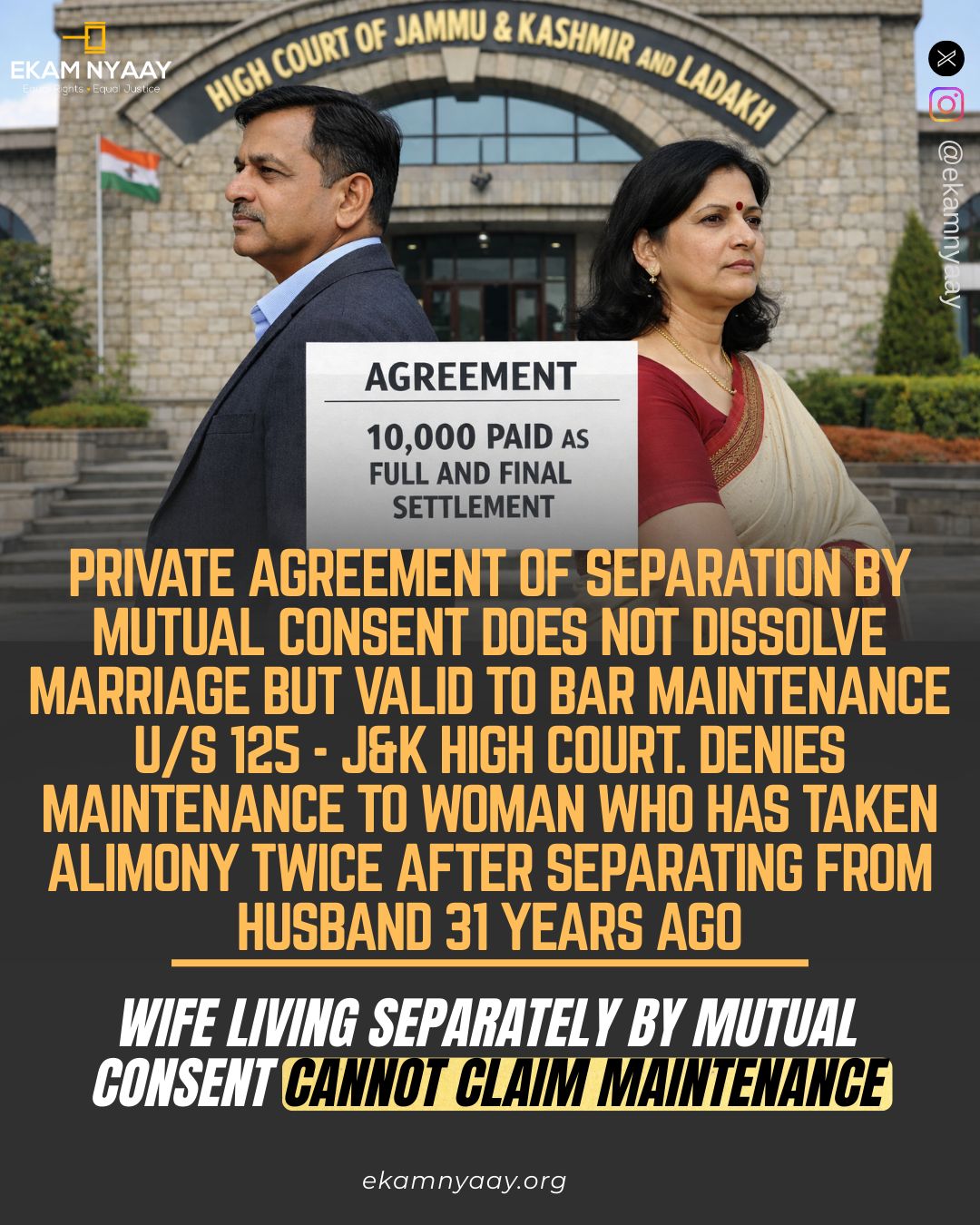
In Sarita Devi v. Mohan Singh, J&K and Ladakh High Court observed that a wife who had earlier entered into a private settlement and lived separately from her husband for decades could not later claim maintenance u/s 125 Cr.P.C.
The Court clarified that although a private agreement cannot legally dissolve a statutory marriage, such an agreement may still be relied upon to determine whether the spouses were living separately by mutual consent, which would bar maintenance.
The facts revealed that the parties were married in 1990 and had a son from the wedlock. In 1995, the wife initiated proceedings against the husband alleging bigamy. However, the parties entered into a compromise on 28.08.1995, pursuant to which the wife withdrew the proceedings after receiving ₹10,000 as a full and final settlement.
Subsequently, wife filed proceedings only for maintenance of the minor child and described herself as divorced in those proceedings. Years later, in 2008, she filed a fresh petition seeking maintenance for herself. The CJM eventually allowed the petition and granted maintenance. However, Revisional Court reversed the order, holding that the parties had been living separately by mutual consent since 1995 settlement.
The wife then approached High Court and argued that the marriage had never been legally dissolved because the customary divorce was not proved. Court agreed that the marital tie had not been legally severed and held, “marriage between Hindus can only be dissolved by a decree of divorce.”
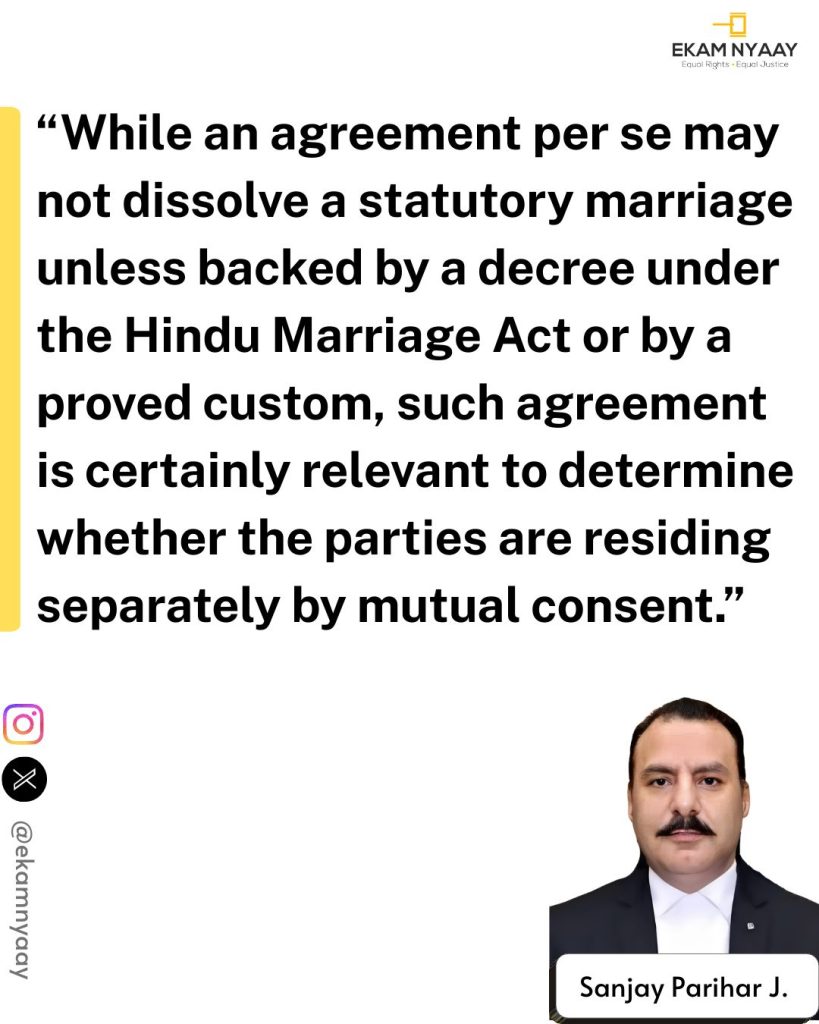
However, Court clarified that the question of dissolution of marriage was distinct from the issue of whether the spouses were living separately by mutual consent. It emphasized that Section 125(4) Cr.P.C. bars maintenance where separation is consensual.
Court also noted the wife’s conduct, observing that she had withdrawn earlier proceedings, accepted settlement money, and described herself as divorced in subsequent proceedings, which constituted clear admissions of consensual separation.
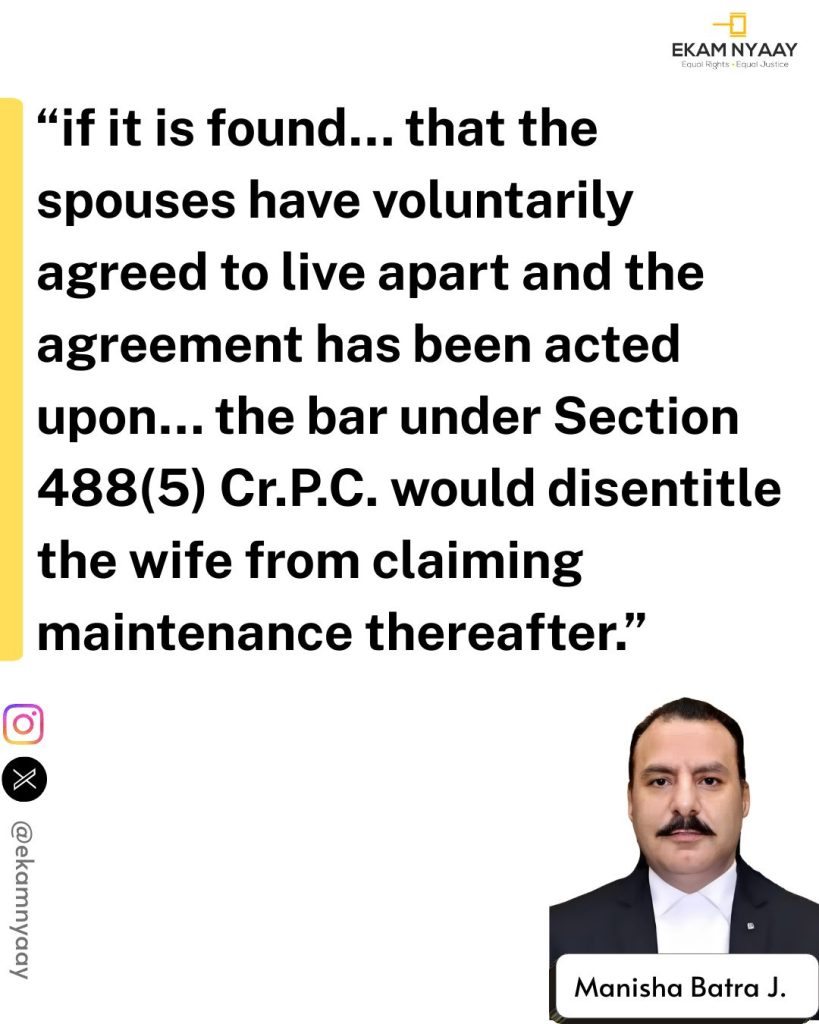
Court found that wife had acted upon 1995 settlement and lived separately for more than a decade without asserting her marital rights. Therefore, Court concluded that she failed to establish neglect or refusal by the husband, which is a necessary requirement for maintenance.
Consequently, High Court upheld the order denying maintenance and dismissed the petitions. However, to ensure equity and prevent hardship, Court directed the husband to pay ₹2.5 lakh as a one-time settlement to the petitioner.
More In this segment
-
-
High Court
- March 2026
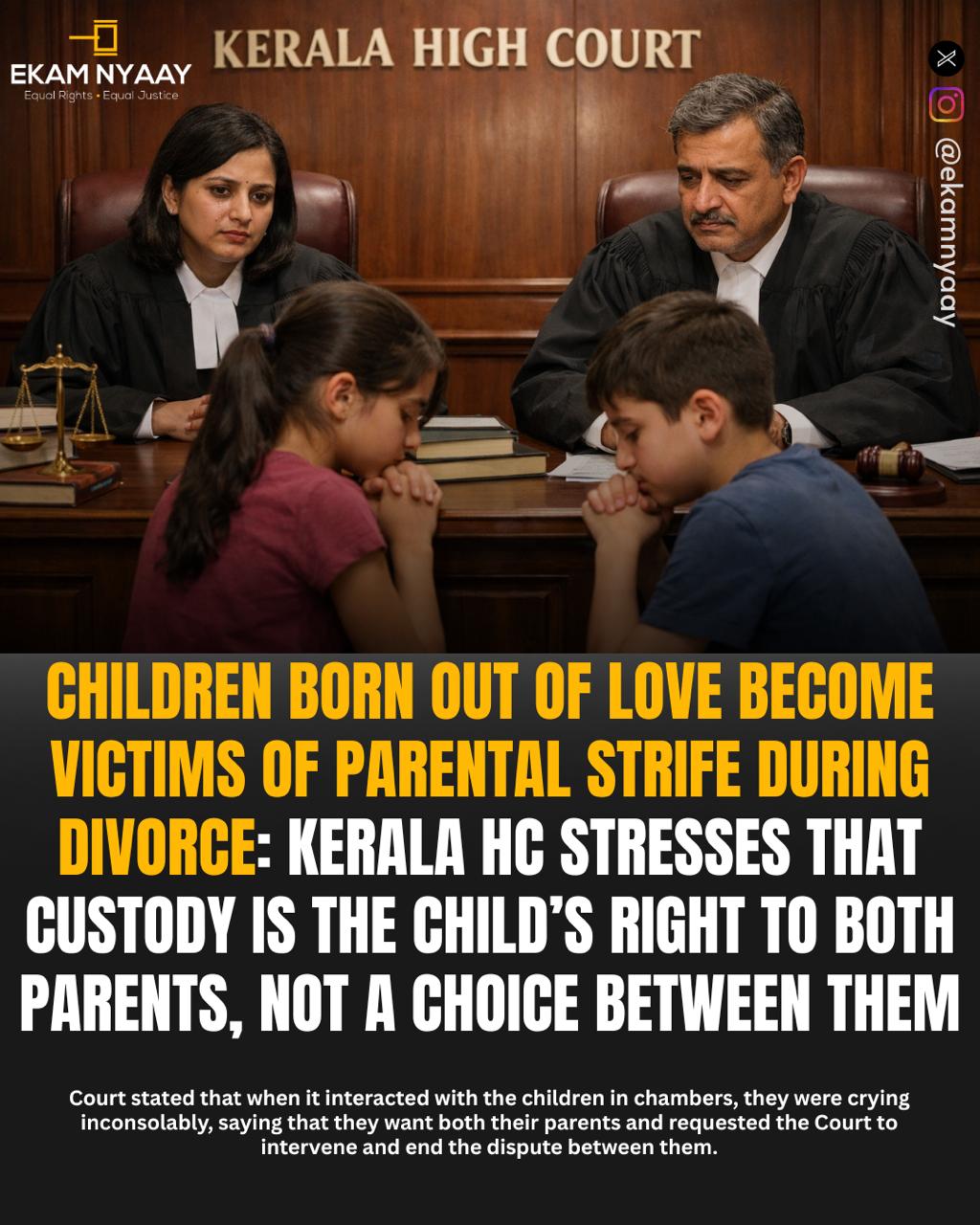
Kerala HC: Custody is the Child’s Right to Both Parents, Not a Choice Between Them.
-
-
-
-