-
High Court


Written Agreement of Live-In Relationship & Voluntary Separation: Gujarat High Court Acquits Man in False Promise of Marriage Case, Observes 'Not Every Dispute Arising from Live-In Relationship Is a Criminal Offence'
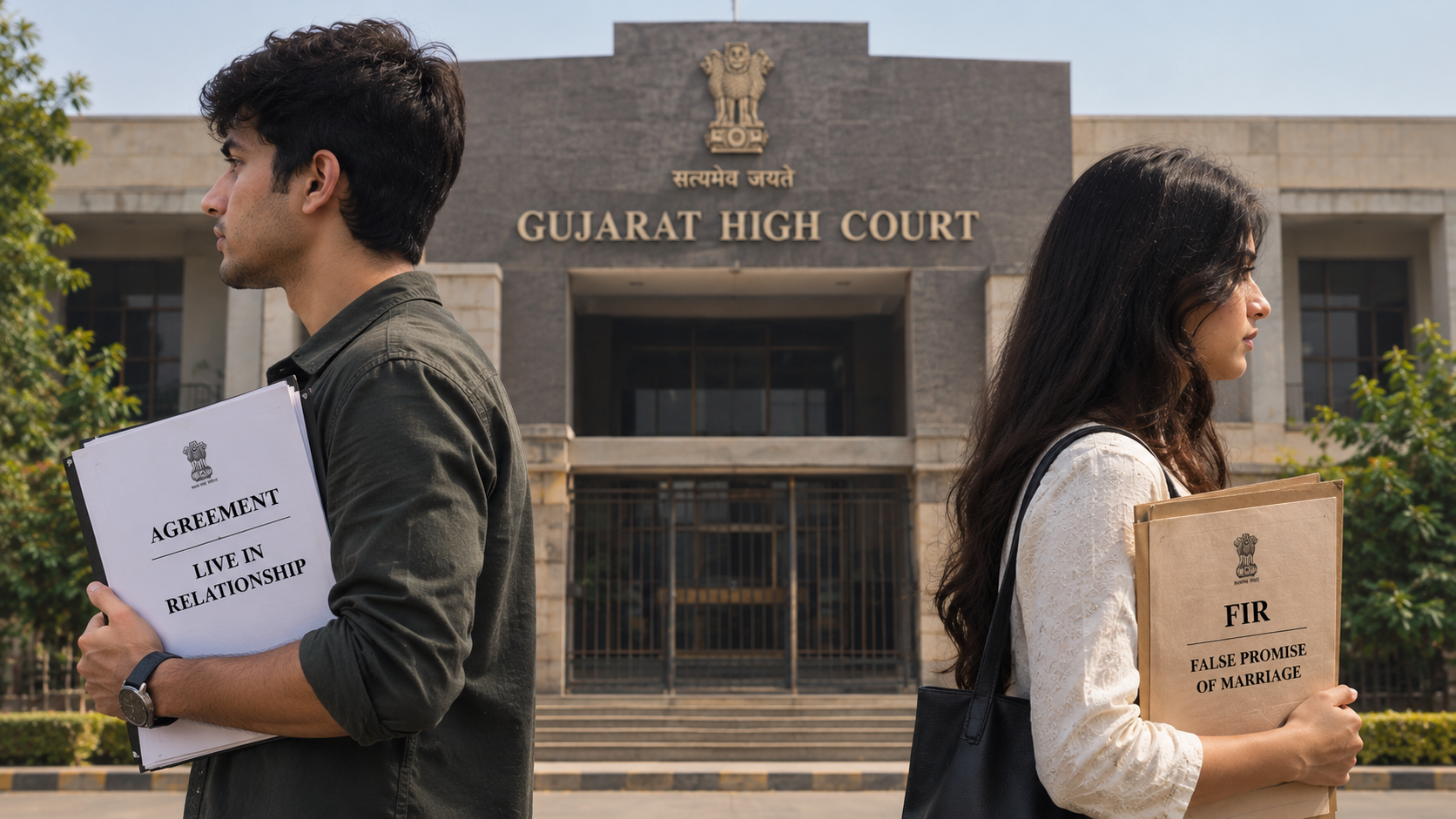
In this case, Gujarat HC upheld the acquittal of a man accused of sexual intercourse on false pretext of marriage and charged u/s 376, 376(2)(n) and 323 IPC, observing that prolonged live-in relationship, written agreements and parties’ conduct supported the conclusion that relationship was consensual.
The complainant, a college student, alleged that she had been in a relationship with the accused for a year before the incident. On 14.08.2019, they executed a written agreement to live together and marry once the accused attained the marriageable age of 21.
She alleged that accused repeatedly had physical relations with her on false promise of marriage, assaulted her when she refused, and demanded money. The couple initially stayed at his house before moving into separate rented accommodation.
She further alleged that on 29.01.2020, the accused threatened to commit suicide and persuaded her to cancel their agreement, following which he abandoned her. She lodged a complaint on 30.01.2020, leading to the registration of an FIR.
The accused, in his statement u/s 313 CrPC, contended that his mother had lodged a complaint against complainant u/s 323 and 294(b) IPC and to escape its consequences, she had falsely implicated him. He denied forcing her into physical relations, assaulting her or demanding money. Sessions Court acquitted him on 31.01.2026 after appreciating the evidence.
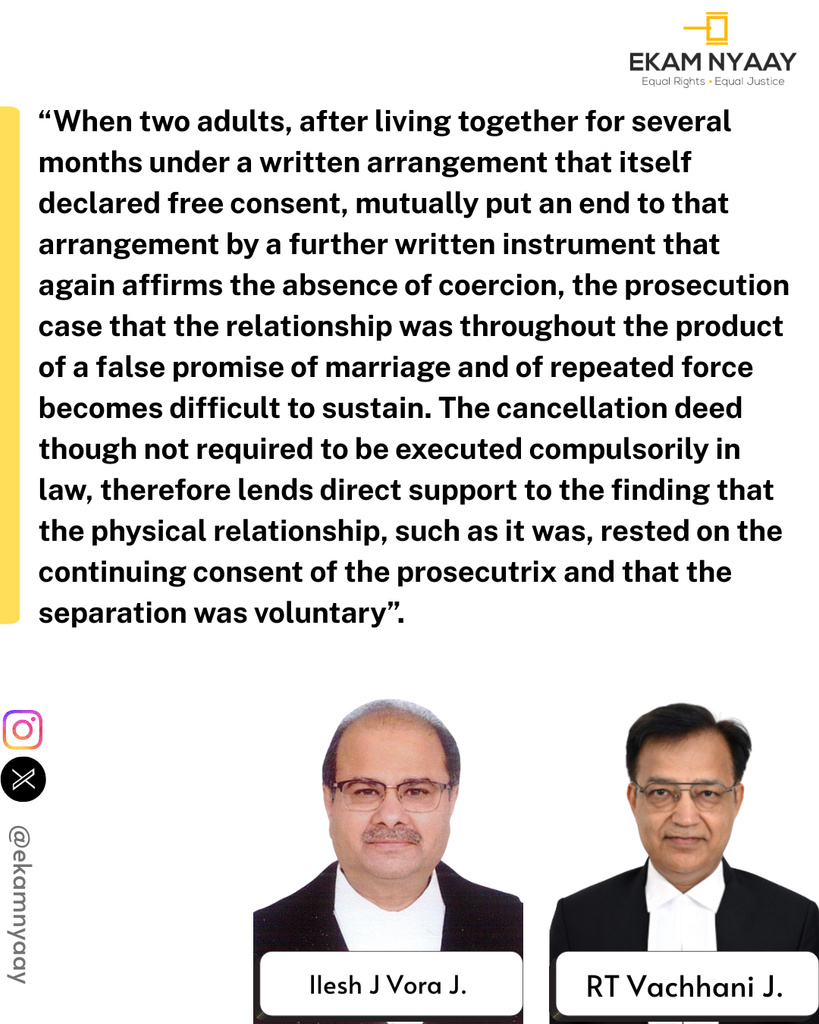
The complainant appealed against the acquittal. High Court examined the original agreement dated 14.08.2019, in which she expressly stated that she was living with the accused voluntarily, without inducement, threats or coercion. It also considered the subsequent agreement dated 29.01.2020, by which the parties mutually agreed to live separately and cancel the earlier arrangement.
Court noted that subsequent agreement recorded their voluntary decision to separate, without pressure or threats, and made no reference to alleged assaults or forced sexual intercourse. It held that agreement supported the finding that relationship was consensual and the separation voluntary.
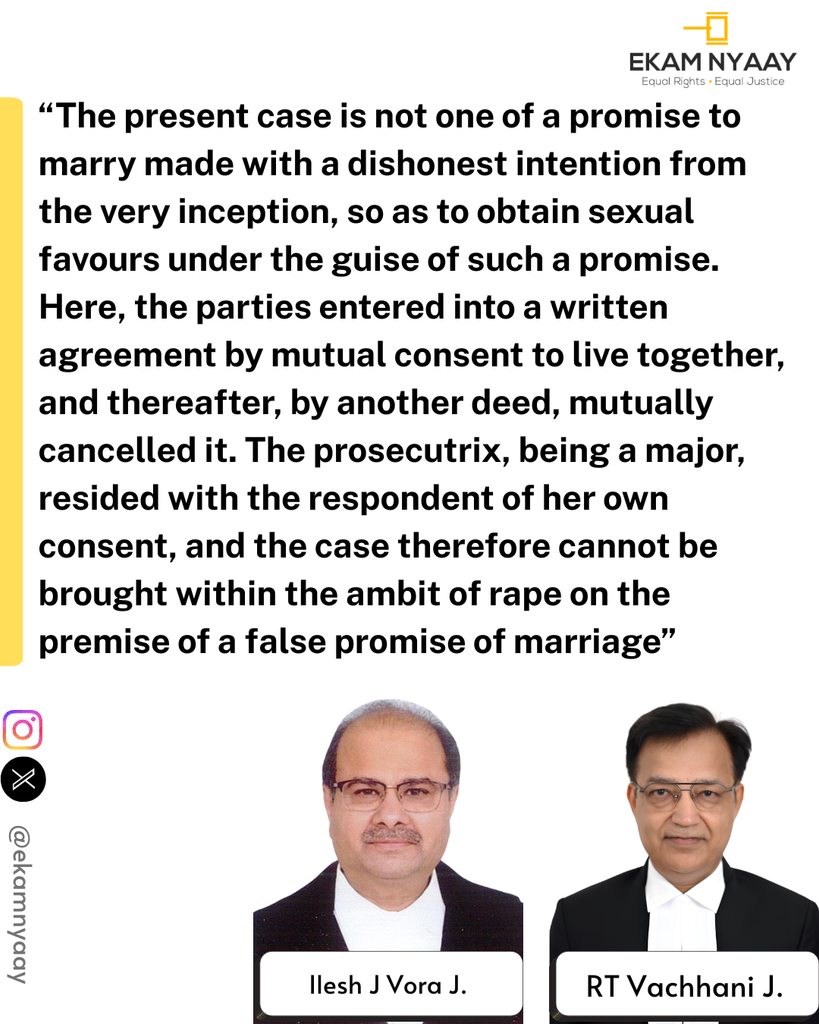
Court further noted that the accused was 20 when the initial agreement was executed and had not attained the marriageable age. It held that the agreement could not be treated as an enforceable instrument compelling the parties to marry.
Court further considered the evidence of complainant’s father, uncle and landlord. Her father admitted that she had gone to stay with the accused after informing him and had entered into the agreement with her consent. Her uncle similarly stated that she had accompanied the accused willingly. The landlord testified that they lived together as husband and wife and complainant had never told him she was being harassed.
Court also cautioned against treating every dispute arising from a failed live-in relationship as a criminal offence. It held that courts should consider relationship’s duration and, particularly, parties’ conduct rather than adopt a pedantic approach.
Finding that prosecution had failed to establish a dishonest promise of marriage from the outset or that complainant’s consent was vitiated by deception, High Court dismissed the appeal.