-
High Court


Party Cannot Unilaterally Withdraw Consent After Signing Court Mediated Settlement Merely Due To Change Of Mind: Jharkhand HC Directs Wife To Comply With Mediation Settlement After Husband Paid ₹35 Lakh Alimony
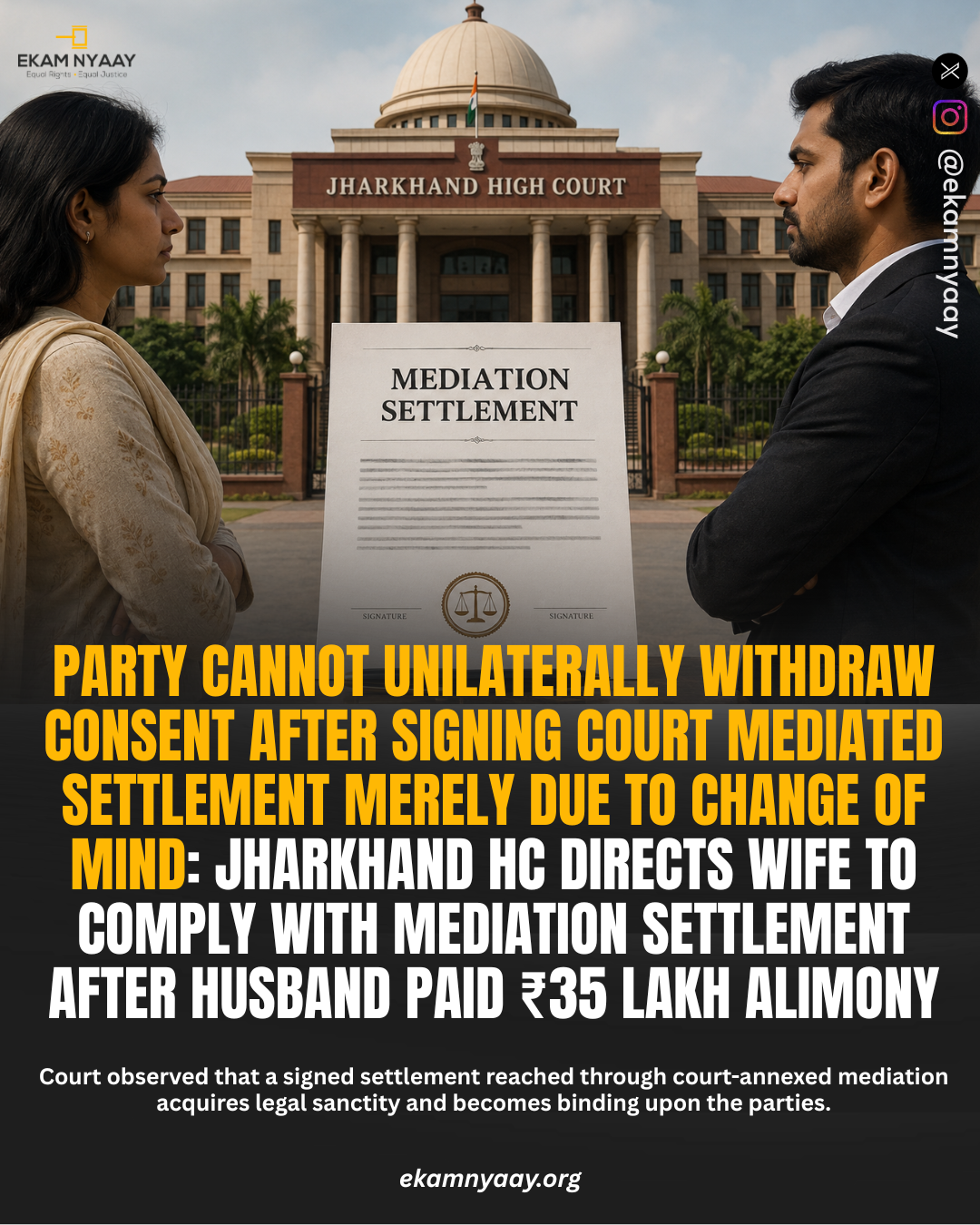
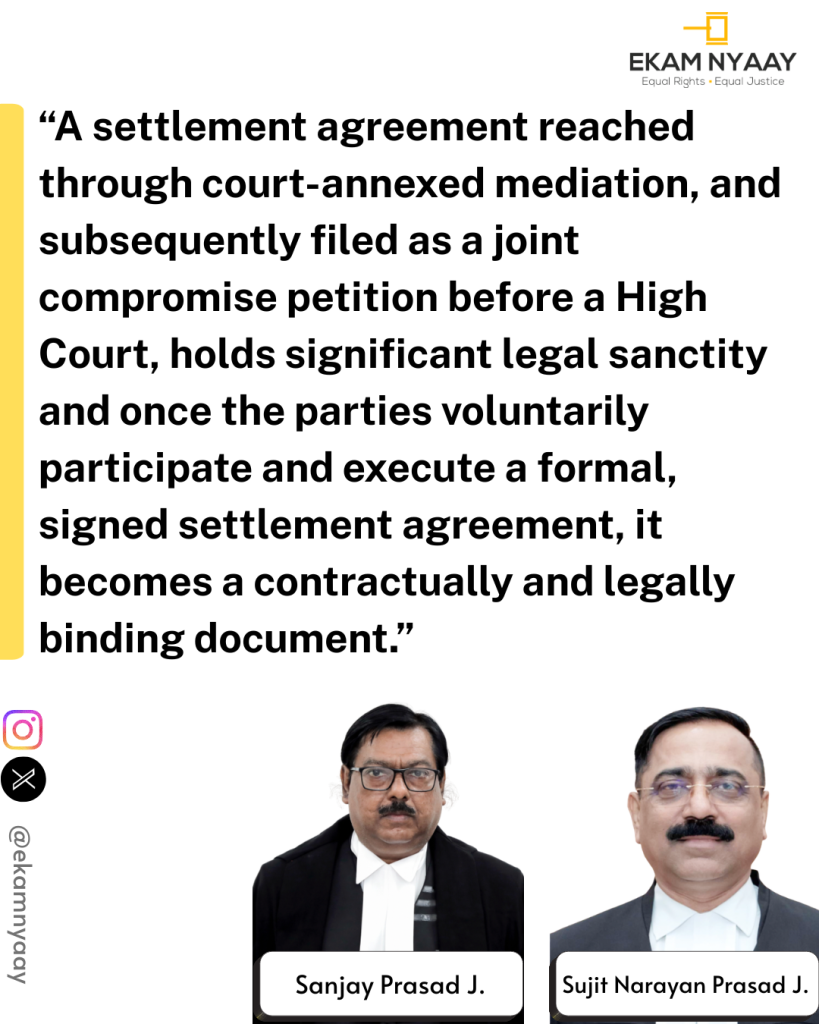
Jharkhand HC held that a settlement arrived at through court-annexed mediation, voluntarily signed by parties and subsequently placed before Court through a joint compromise petition, cannot be unilaterally withdrawn merely because one party later changes their mind.
The case arose from Family Court's dismissal of husband's petition seeking divorce on grounds of cruelty and desertion. The parties had married in 2011 and had a son born in 2013. The husband alleged that wife repeatedly insisted that he become a ghar jamai, used abusive language against him and his parents, threatened to implicate him and his family in false dowry cases, and ultimately deserted him.
Family Court, after considering the pleadings, evidence and material on record, dismissed husband’s divorce petition. The husband consequently filed an appeal before Jharkhand HC. During the pendency of appeal, both parties consented to participate in High Court’s Special Mediation Drive – Mediation “For the Nation”. The matter was thereafter taken up by mediator, and parties arrived at a settlement.
The husband agreed to pay ₹35 lakh as permanent alimony, ₹40 lakh towards child's education and other expenses, and ₹5 lakh towards child's medical expenses. Wife agreed to withdraw her maintenance petition. The parties also agreed that neither would initiate further proceedings arising from marriage and father's visitation rights would not be restricted. A joint compromise petition was subsequently filed before High Court.
The husband thereafter complied and paid ₹35 lakh through NEFT. However, wife did not comply with certain reciprocal obligations. When the matter came up before High Court, counsel for the wife submitted that although settlement had been reached during mediation, she had subsequently given matter a “re-thought” and was no longer agreeable to disposal of appeal in accordance with settlement.
However, Court observed that a signed settlement reached through court-annexed mediation acquires legal sanctity and becomes binding upon the parties. Referring to Mediation Act, 2023, Court observed that a mediated settlement is enforceable in the same manner as a judgment or decree.
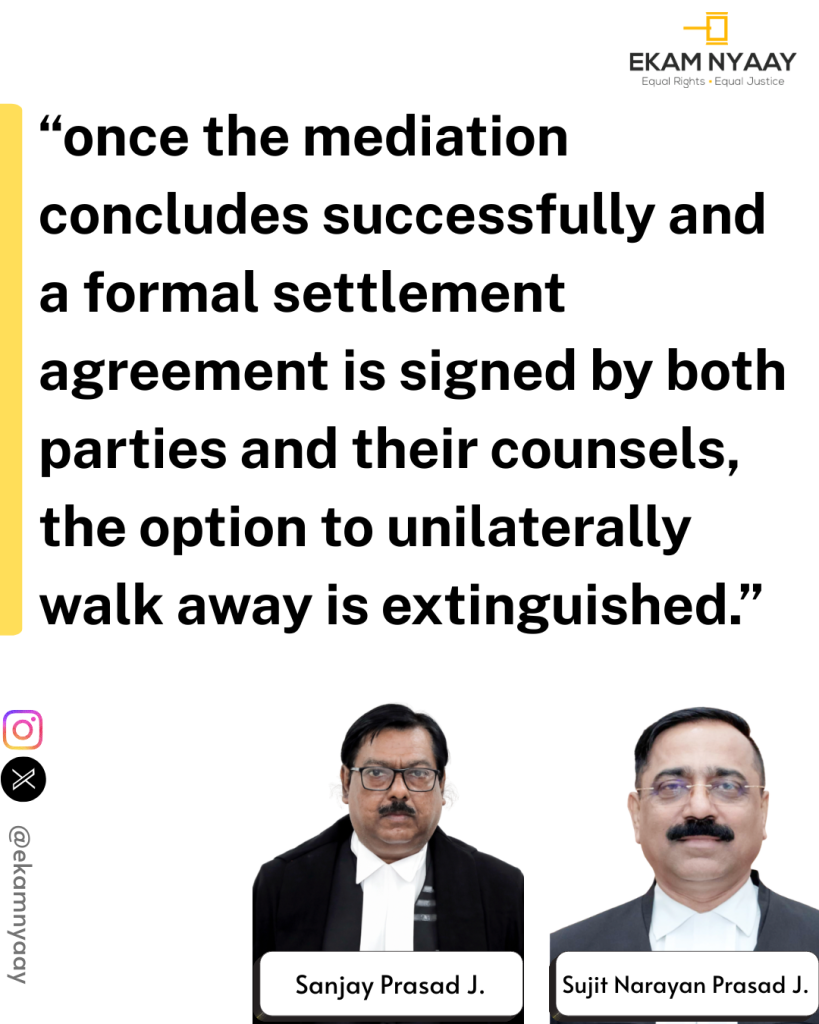
Court further relied upon SC’s decision in Perry Kansagra v. Smriti Madan Kansagra, observing that freedom to withdraw exists only while mediation is ongoing. Once mediation has successfully concluded and a formal settlement has been signed, a party cannot subsequently walk away from it.
Court also applied the doctrine of estoppel as the husband had already acted upon the settlement by paying ₹35 lakh. Accordingly, Jharkhand HC directed both parties to adhere to the terms of mediation settlement, under which they had unequivocally agreed to dissolve their marriage.
Therefore, Court disposed of the appeal in terms of the settlement and directed both parties to comply with its terms in toto within 6 months.