-
High Court


Wife Working With Wipro, Earning ₹1.7 Lac Per Month, Demands ₹1.8 Lac Per Month Maintenance From Husband, Claiming To Be Jobless. Calcutta High Court Slaps ₹20K Fine, Dismisses Her Case & Sets Aside ₹45K Per Month Maintenance Granted By Lower Court.

Calcutta HC quashed maintenance proceeding after finding that wife had deliberately concealed her employment and actual income while claiming to be financially dependent on her aged parents. Court held that she was earning more than her husband and had misused the beneficial provision of law to obtain maintenance. It also imposed costs of ₹20,000 on her for abusing the process of law.
In January 2021, wife filed a complaint against husband and his family members u/s 498A/323/406/ 34 IPC along with Section 3 & 4 DP Act. Subsequently, in April 2022, she filed an application u/s 125 CrPC seeking maintenance of ₹1,80,000 p.m., claiming that she is a housewife with no independent source of income and is dependent upon her aged parents.
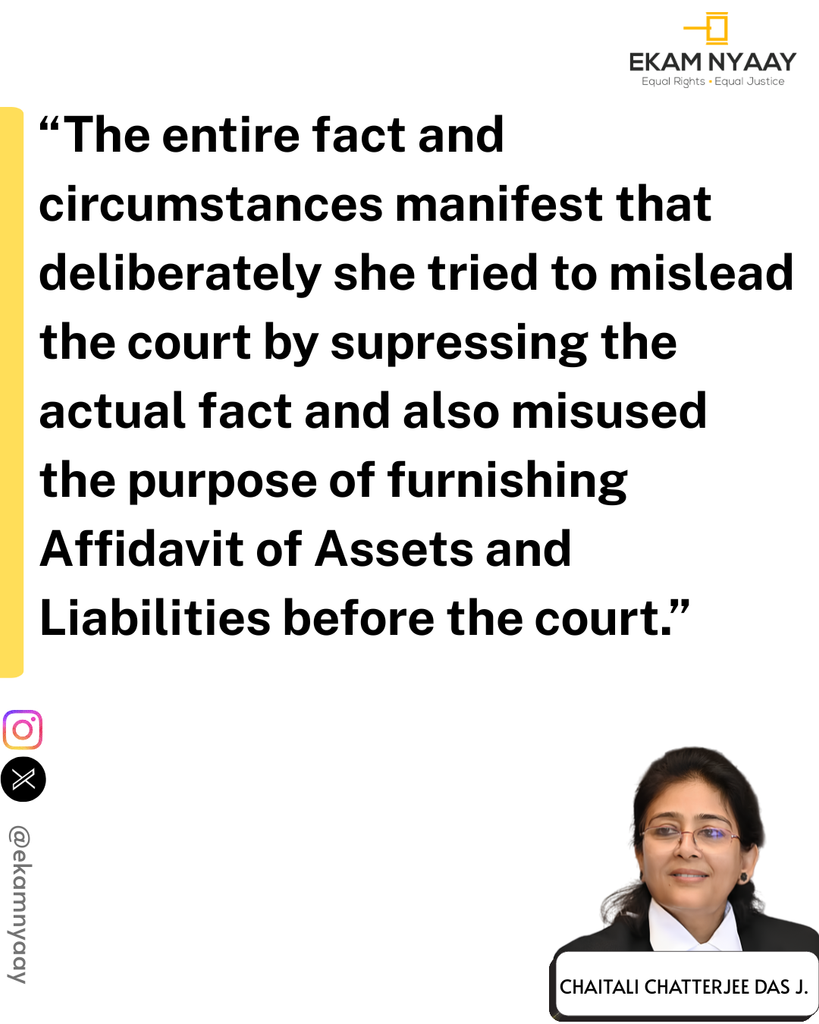
However, despite holding B.Tech and MCA degrees and working as a Senior Project Engineer at Wipro Technologies, she mentioned her income as 'N/A' in her Affidavit of Assets and Liabilities.
Husband contended that his wife was earning approximately ₹1,30,000 p.m. and had deliberately concealed her employment and income. He sought directions for production of her bank statements and income tax returns for preceding 3 years.
He further submitted that his application seeking disclosure of financial documents had not been decided and Magistrate, without properly hearing his objections, directed him to pay interim maintenance of ₹45,000 p.m. on 30.03.2024. He also highlighted that his own monthly income was approximately ₹1,15,000, with loan EMI of ₹40,349.
During the proceedings before High Court, wife produced her salary certificates issued by Wipro Technologies, disclosing a salary of approximately ₹1.75 lakh for August 2026, including bonus, thereby establishing that she earned more than her husband.
Court rejected her explanation that the incorrect declaration regarding her income was due to miscommunication with her previous advocate. It observed that her educational qualifications made it difficult to believe that she was unaware of the contents of her sworn affidavit.
Court referred to Supreme Court's judgment in Rajnesh v. Neha, which mandates disclosure of assets and liabilities through affidavits to determine the entitlement and quantum of maintenance. It held that wife had misused this requirement by deliberately suppressing her actual income.
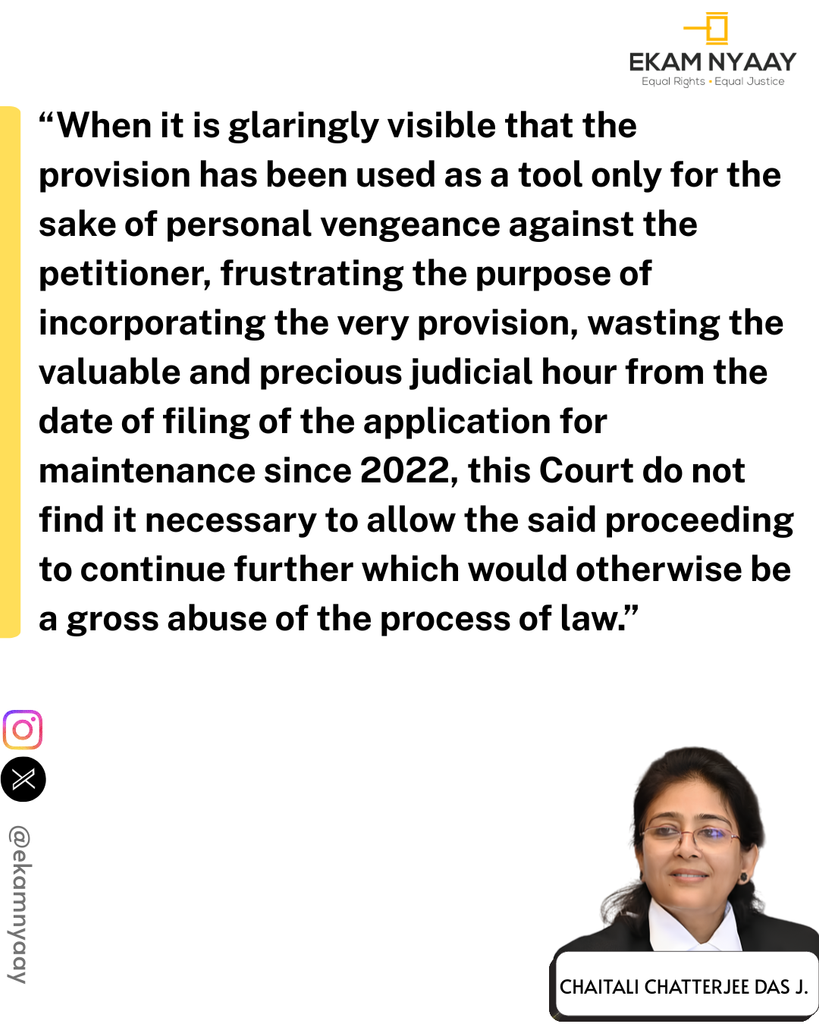
Accordingly, Court quashed the entire maintenance proceeding and directed wife to deposit ₹20,000 as costs in JJ Fund within 10 days.