-
High Court


Rajasthan HC: Compensation Under DV Act Cannot Be Granted Until Criminal Court Decides Cruelty Allegations
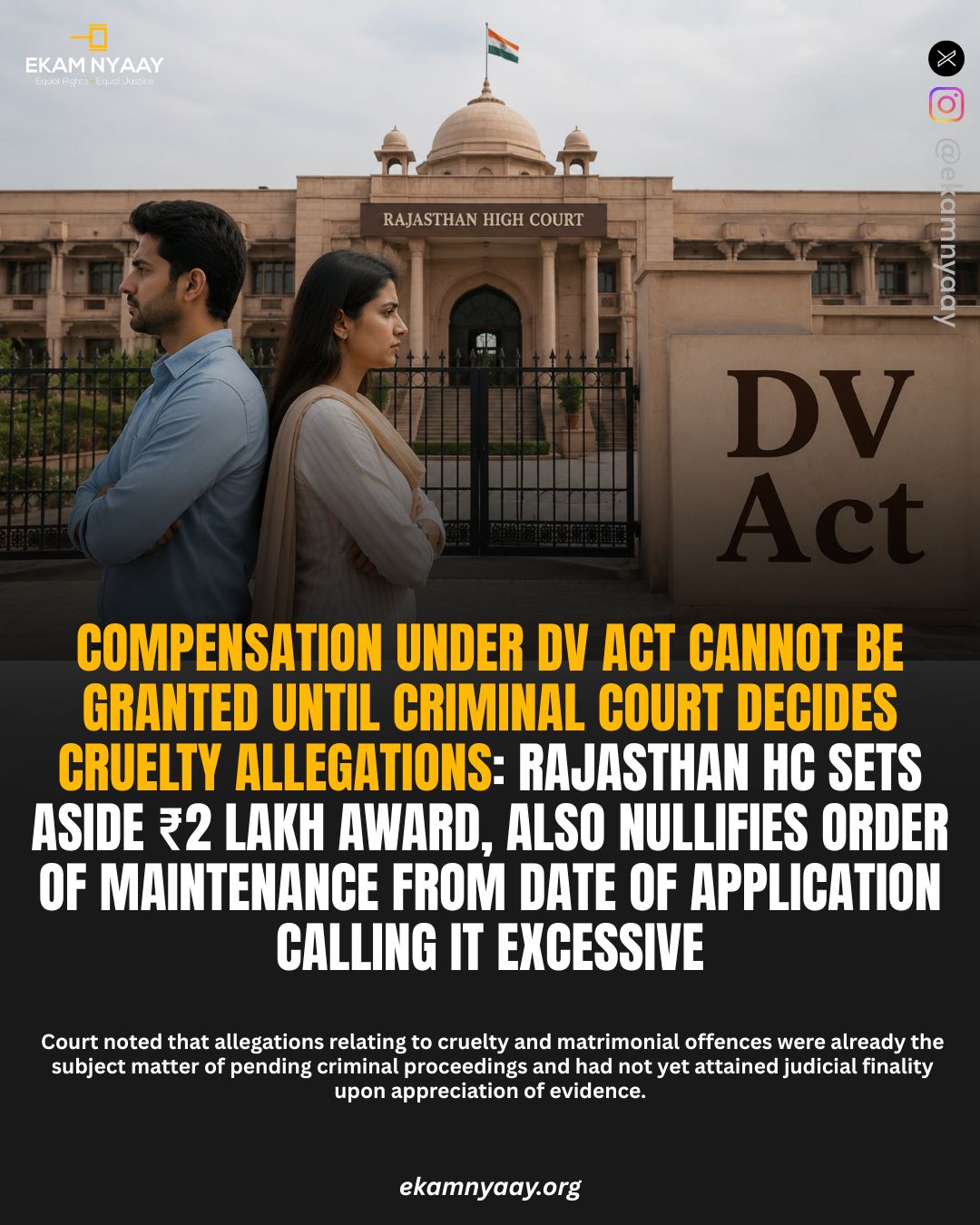
In Rakesh Sharma v. Manju Devi & Ors., Rajasthan HC held that compensation under DV Act cannot be awarded on the basis of disputed allegations of cruelty and harassment when such allegations are already pending adjudication before a competent court.
The respondent-wife, Manju Devi, had filed an application under Section 12 of DV Act in 2014 alleging cruelty, harassment, and dowry demands against the husband and his family members, seeking protection, maintenance, residence, and compensation.
Trial Court partly allowed wife’s application in Feb 2025 and directed husband to pay monthly maintenance of ₹20,000, accommodation expenses of ₹5,000, and compensation of ₹2 lakh towards alleged mental and physical harassment.
Appellate Court partly modified the order by reducing the maintenance amount for a certain period but affirmed the compensation awarded to wife. Aggrieved by these findings, husband approached the High Court by way of a revision petition.
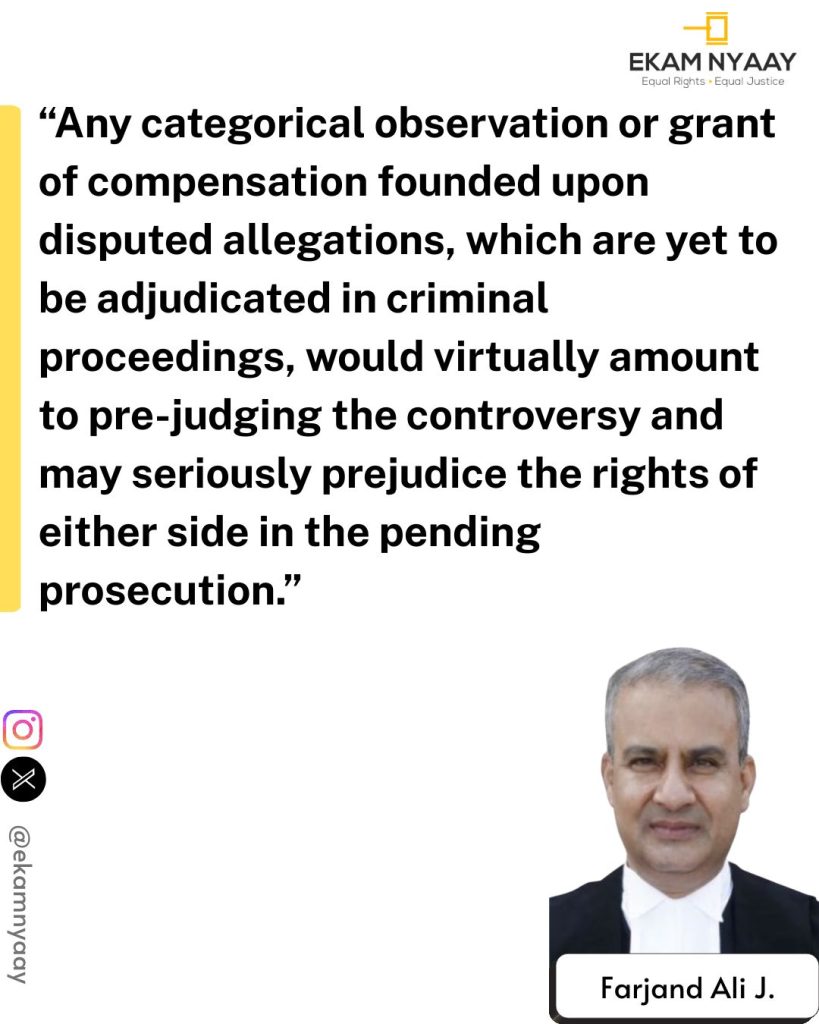
The High Court observed that the courts below failed to appreciate the limited scope of jurisdiction under DV Act. It noted that allegations relating to cruelty and matrimonial offences were already the subject matter of pending criminal proceedings and had not yet attained judicial finality upon appreciation of evidence.
Court emphasized that findings touching upon such allegations should not be conclusively recorded in DV proceedings.
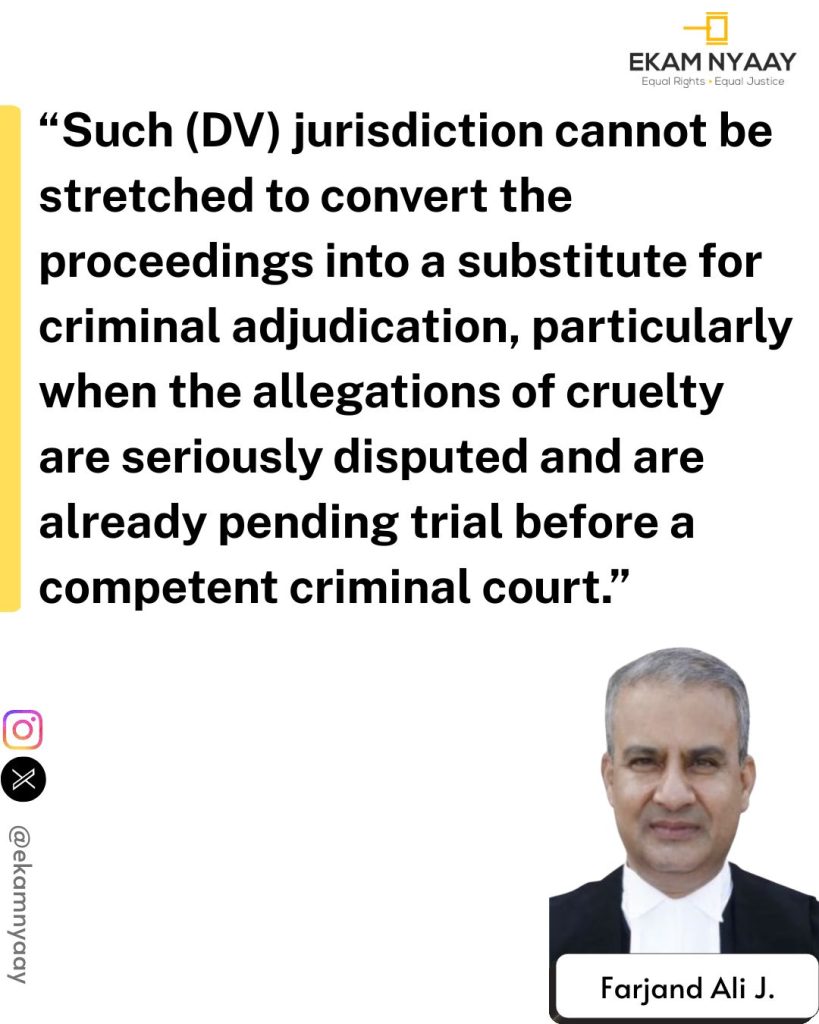
Court also explained the nature and object of the DV Act and observed, “The jurisdiction under DV Act is essentially remedial and protective in nature. The court is required to examine whether the aggrieved person requires immediate civil assistance by way of residence, maintenance, protection or monetary relief so as to enable her to live with dignity.”
High Court clarified that the courts below were justified only to the limited extent of recognising undisputed facts such as the marital relationship between the parties, wife residing separately, and her lack of sufficient independent income.
However, the courts ought not to have recorded findings regarding cruelty and harassment while those allegations were still pending adjudication before criminal court.
Accordingly, High Court quashed the direction directing payment of ₹2 lakh towards alleged mental cruelty and harassment.
It also set aside the appellate court’s direction requiring payment of retrospective maintenance from the date of the application, holding the same to be excessive and unsustainable.