-
High Court


Madras HC: POCSO Act Cannot Be Used As A Weapon To Settle Personal Feuds Or Matrimonial Disputes. Highlights Acts Misuse.
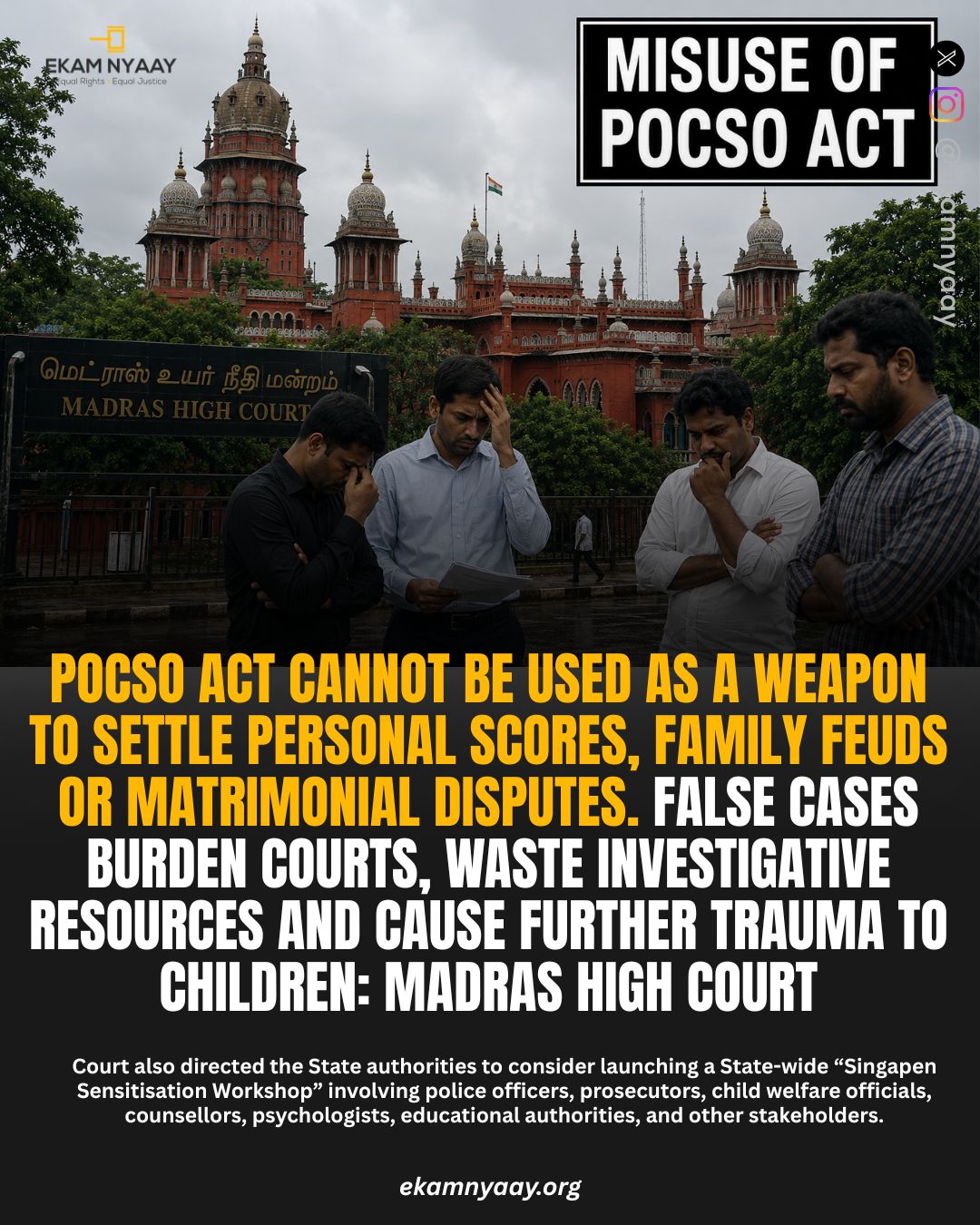
In Mikavel v. State, Madras High Court highlighted the misuse of the POCSO Act arising out of family disputes, matrimonial conflicts, personal vendetta, and rivalries. While emphasizing that genuine child sexual abuse cases must be prosecuted with utmost seriousness.
Court cautioned that “False POCSO cases, apart from harming the accused, consume enormous judicial time and investigative resources which ought to be devoted towards genuine child victims.”
Court delivered a significant judgment examining 4 separate POCSO cases from different districts of Tamil Nadu and explained that all 4 matters revealed a common and disturbing feature.
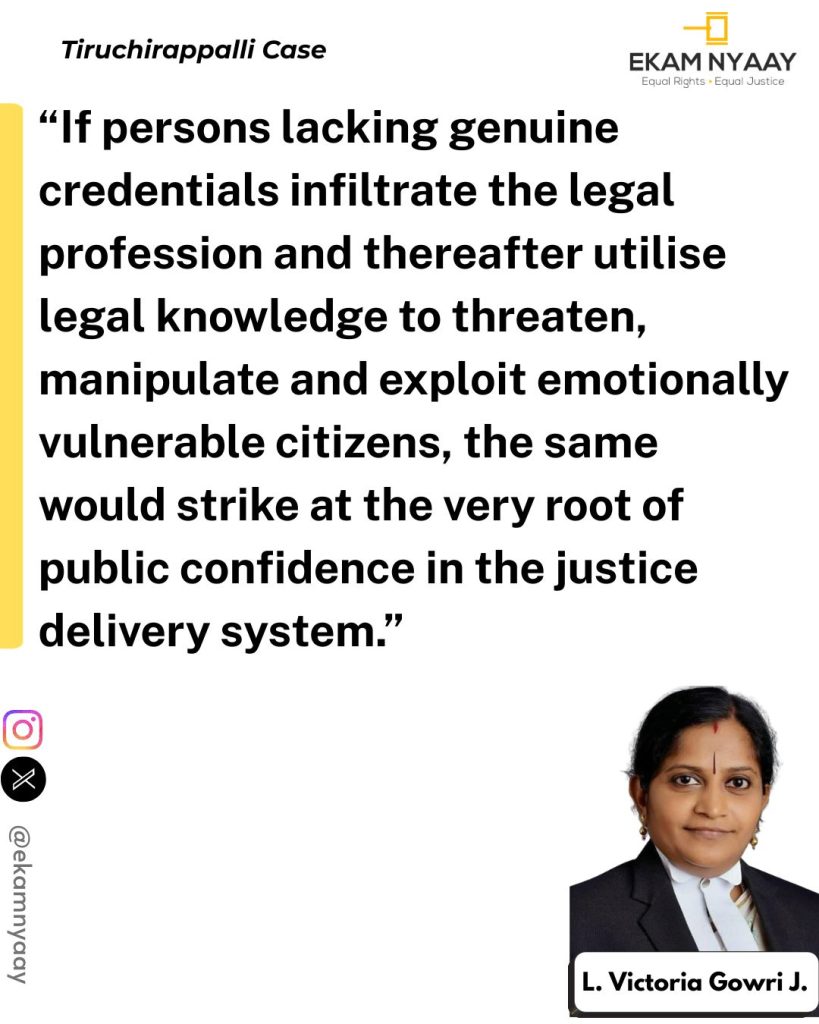
In the Tiruchirappalli case, a doctor was accused of kidnapping and sexually assaulting a minor girl whom he had allegedly met through Instagram. During the proceedings, a compromise petition was filed claiming that the complaint was false and had been lodged under the influence of doctor's wife who is also a lawyer.
Child counsellors report also revealed that the victim alleged that complaint had been drafted by the lawyer, an advocate had been arranged by her, and complaint had been filed under threats and coercion. Police records also revealed several earlier complaints connected to the same lawyer and discrepancies in her enrolment documents before Bar Council.
Considering these circumstances, Court refused to quash POCSO proceedings merely on the basis of compromise and found prima facie material suggesting possible manipulation and coercion by the lawyer.
Accordingly, Court directed SP to conduct an enquiry into offence u/s 22 POCSO Act and requested Bar Council of Kerala to independently verify the lawyer’s enrolment credentials. The POCSO trial was stayed pending completion of the enquiry.
In the Thoothukudi case, the complainant alleged that her relative had repeatedly sexually assaulted her when she was a minor. However, in her statement before Magistrate and later during counselling, she stated that no sexual offence had been committed and that she had lodged the complaint at the instance of other persons.
Counselling report revealed that she was emotionally vulnerable and had been influenced by others. Court found that despite the exculpatory statement, police mechanically filed the chargesheet without properly considering its significance.
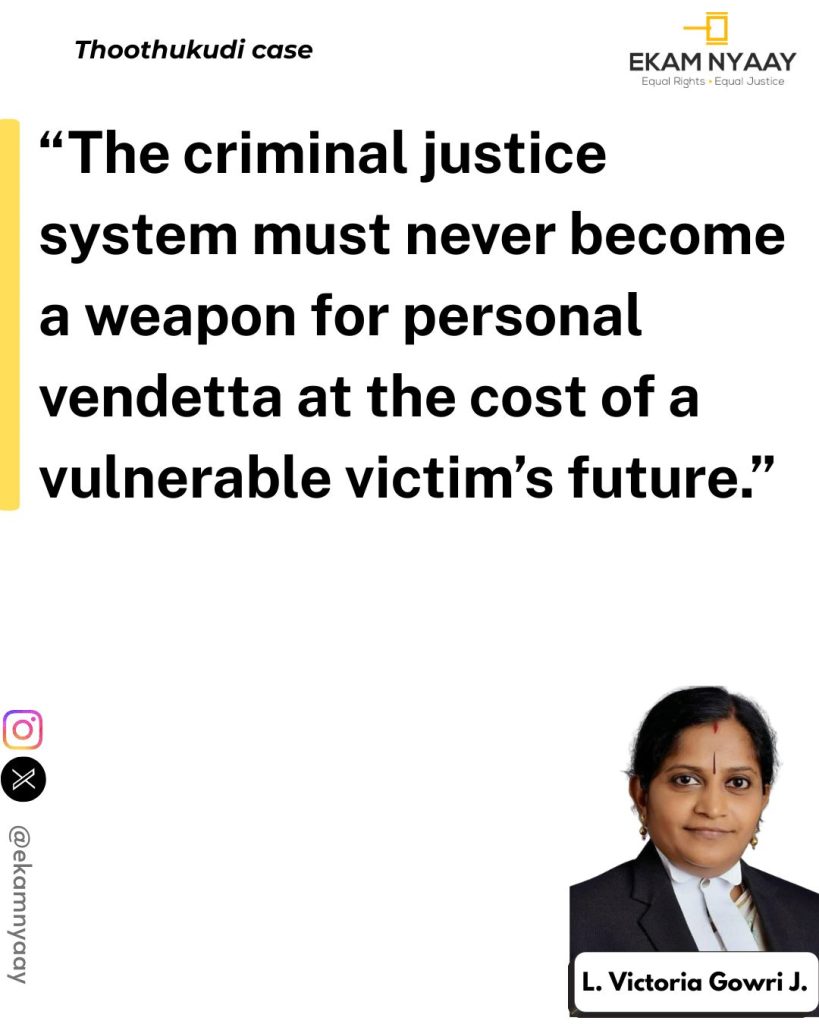
Consequently, Court quashed the proceedings, directed a preliminary enquiry into possible offences u/s 22 POCSO Act, and ordered counselling, vocational rehabilitation, and skill-development support for the victim.
In the Pudukkottai case, a father was accused of repeatedly committing rape upon his 14-year-old daughter. During the proceedings, both the mother and maternal grandmother filed affidavits stating that there had been no sexual assault and allegations emerged amidst matrimonial disputes and domestic discord.
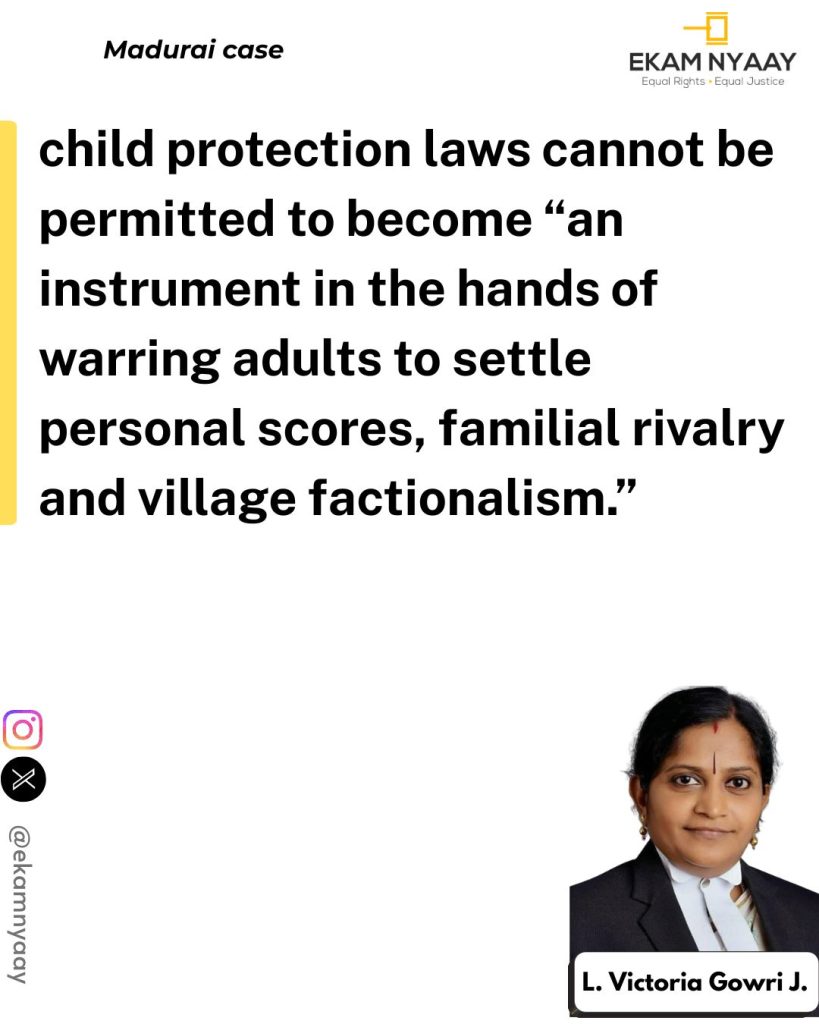
Court held that forcing the child through a hostile criminal trial would only expose her to further trauma.
Accordingly, Court quashed the proceedings while simultaneously directing regular monitoring of the child’s education and counselling for the father
In Madurai case, prosecution alleged that 2 men sexually assaulted a 15-year-old girl. However, defence argued that the case was a counterblast to another criminal case registered on the same day.
During the hearing, Court noted that police could not deny the allegation that POCSO case was a retaliatory complaint. It therefore ordered psychological assessment and counselling of the children involved to independently ascertain the truth.
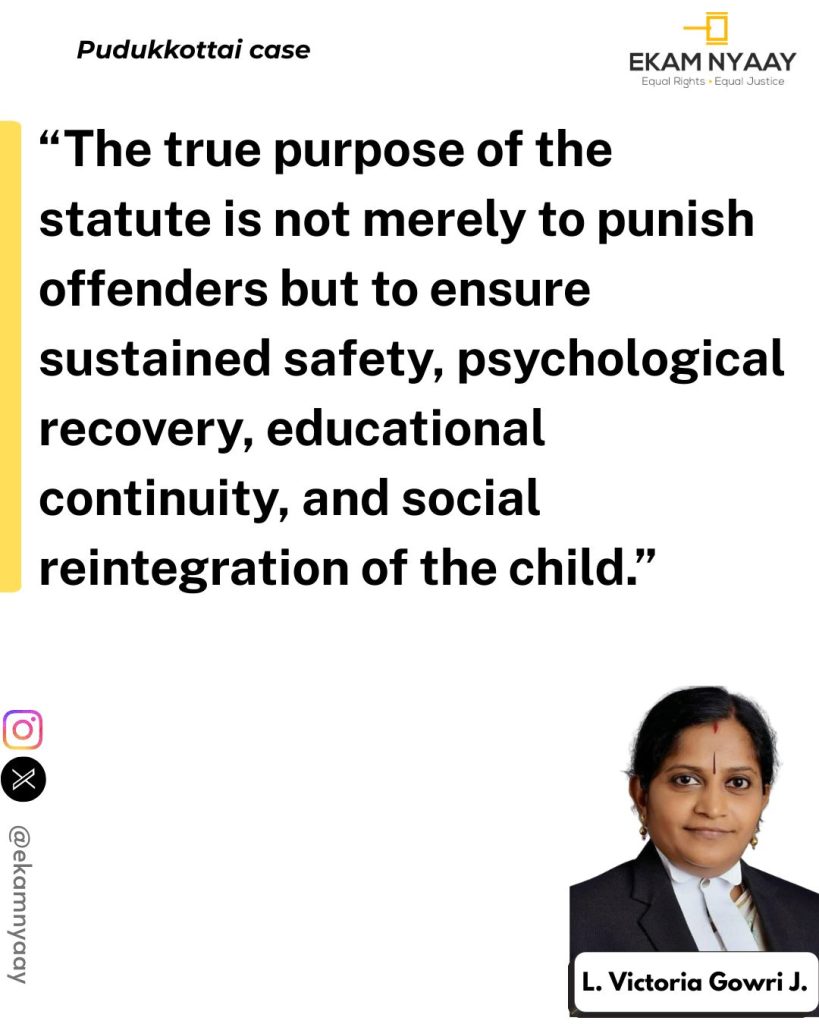
Court repeatedly emphasized that its observations should not be interpreted as weakening the POCSO Act and stressed that when child protection laws are implemented mechanically or irresponsibly, children themselves become the ultimate victims of the system.
Court also directed the State authorities to consider launching a State-wide “Singapen Sensitisation Workshop” involving police officers, prosecutors, child welfare officials, counsellors, psychologists, educational authorities, and other stakeholders.
The proposed programme is intended to focus on trauma-sensitive implementation of the POCSO Act, child psychology, ethical interviewing techniques, prevention of misuse of POCSO provisions, and awareness regarding Section 22 of the Act.