-
High Court


Delhi HC Orders Preservation of CDRS, Transaction Records and CCTV Footage for Fair Trial
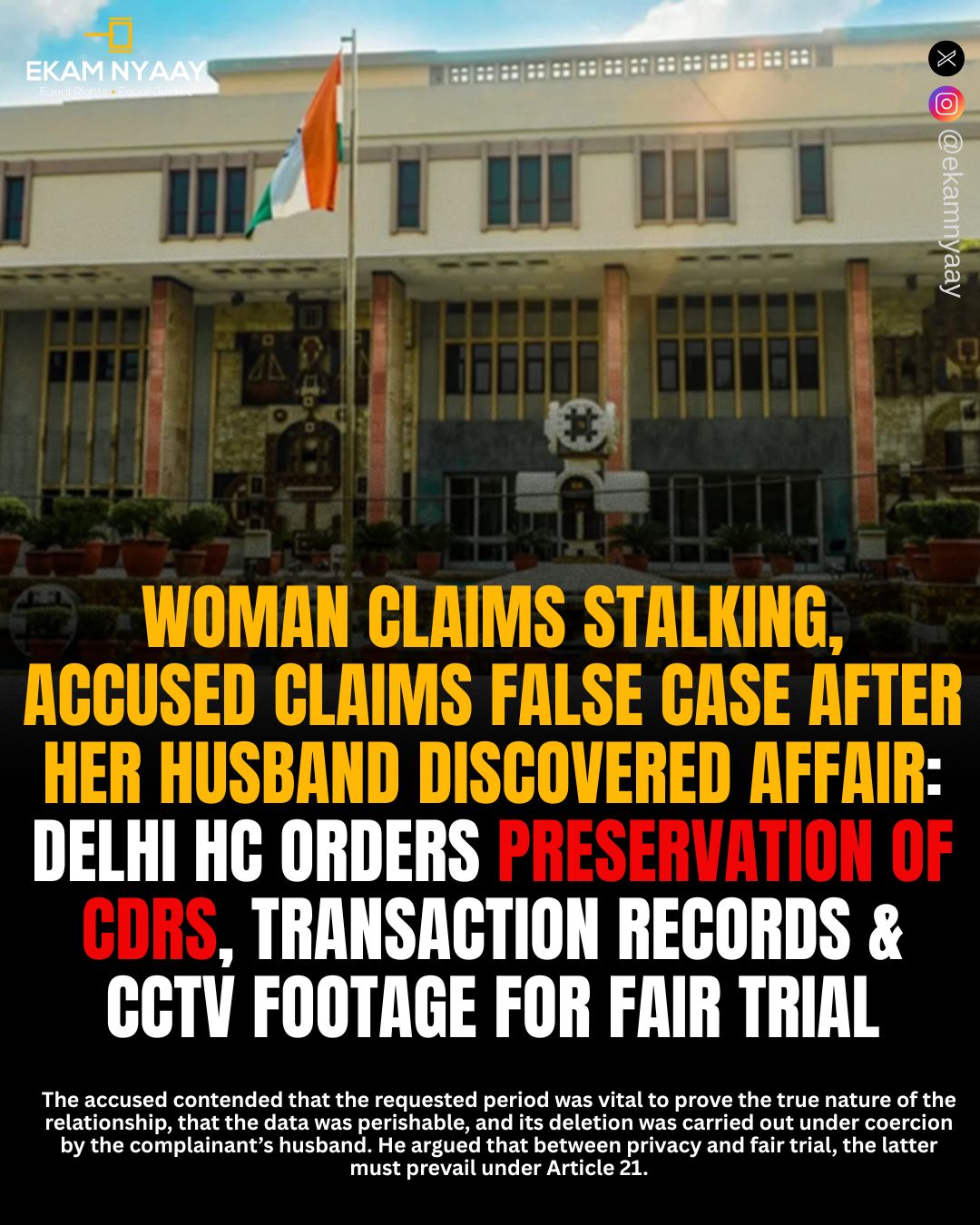
In Sohail Malik v. State of NCT of Delhi and Anr., Delhi HC held that the privacy concerns of a complainant cannot override an accused’s right to seek preservation of evidence claimed to be exculpatory, as such preservation is integral to ensuring a fair trial under Article 21 of the Constitution.
The complainant lodged a police complaint on 16.05.2023 alleging stalking and sexual harassment by the accused, Sohail Malik. The FIR was registered u/s 354, 354-D, 506, and 509 IPC, later supplemented with Sections 201, 204 IPC, and Section 67 of IT Act in the charge sheet. According to the complainant, the accused had been pursuing her against her will since 2020.
The accused, however, maintained that they had been in a consensual intimate relationship for 3 years, which soured after her husband discovered it. He claimed that various records including CDRs, online transactions, and CCTV footage would establish the true nature of the relationship and disprove the allegations.
The petitioner, therefore, challenged orders dated 24.04.2024 and 28.05.2024 of the Magistrate dismissing his Section 91 CrPC plea. He had sought preservation of Call Detail Records (CDRs), certain online transaction data, and CCTV footage, claiming they would demonstrate an intimate relationship with the complainant from April 2020 to May 2023, thereby rebutting the allegations.
On 05.04.2024, the Magistrate initially directed the IO to “ensure only preservation of data/CDRs,” clarifying it was not a direction for further investigation. However, this order was later recalled after hearing the complainant, and Magistrate ordered that the data was “neither necessary nor desirable” and could breach the complainant’s privacy.
The accused contended that the requested period was vital to prove the true nature of the relationship, that the data was perishable, and its deletion was carried out under coercion by the complainant’s husband. He argued that between privacy and fair trial, the latter must prevail under Article 21, and that preservation alone would not prejudice the complainant.
State argued that the appellant’s request failed the “necessity” and “desirability” tests of Section 91 CrPC, would at best show acquaintance already admitted, and was irrelevant to the specific allegations. It emphasised the accused’s alleged destruction of evidence and misconduct.
The complainant contended that the request was premature before framing of charge, amounted to further investigation, and that preservation would cause a serious breach of her privacy. State of Rajasthan v. Swarn Singh @ Baba was cited to argue that Section 91 cannot be invoked at the pre-charge stage by an accused.
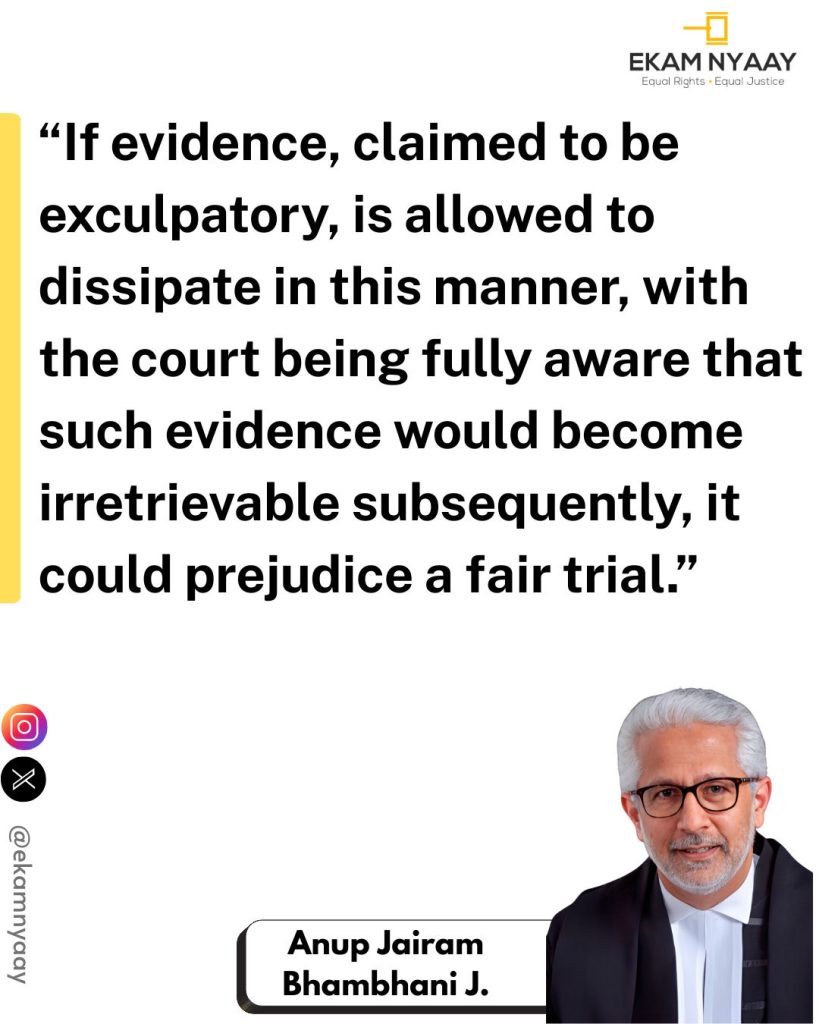
Justice Anup Jairam Bhambhani observed, “CDRs could turn-out to be elements of evidence, which are either inculpatory or exculpatory, when examined in conjunction with other evidence… if not preserved at this stage, they would… become completely irretrievable and unavailable.”
Court stressed that India’s system lacks mechanisms for an accused to collect exculpatory evidence, and investigative bias often leads to the withholding of such material.
It further held that the data satisfied the “necessity” test and, being perishable, its preservation was “desirable”. Questions of relevance, admissibility, or privacy impact were matters for trial, not for deciding preservation.

On privacy, Court stated, “such concerns cannot stand in the way of at least preserving what the accused claims to be exculpatory evidence” and directed that only the accused’s CDRs for 01.04.2020 to 15.05.2023 would be preserved, the complainant’s CDRs already received would be destroyed and her other data would be kept only for transactions with the accused or his family.
Therefore, Delhi HC set aside the Magistrate’s later orders, restored the 05.04.2024 order with modifications, and directed preservation of the data specified in the Section 91 application along with Section 65B certificates. The preserved material would remain with the Magistrate without disclosure at this stage, with both parties free to seek access at a later stage.