-
Other Court

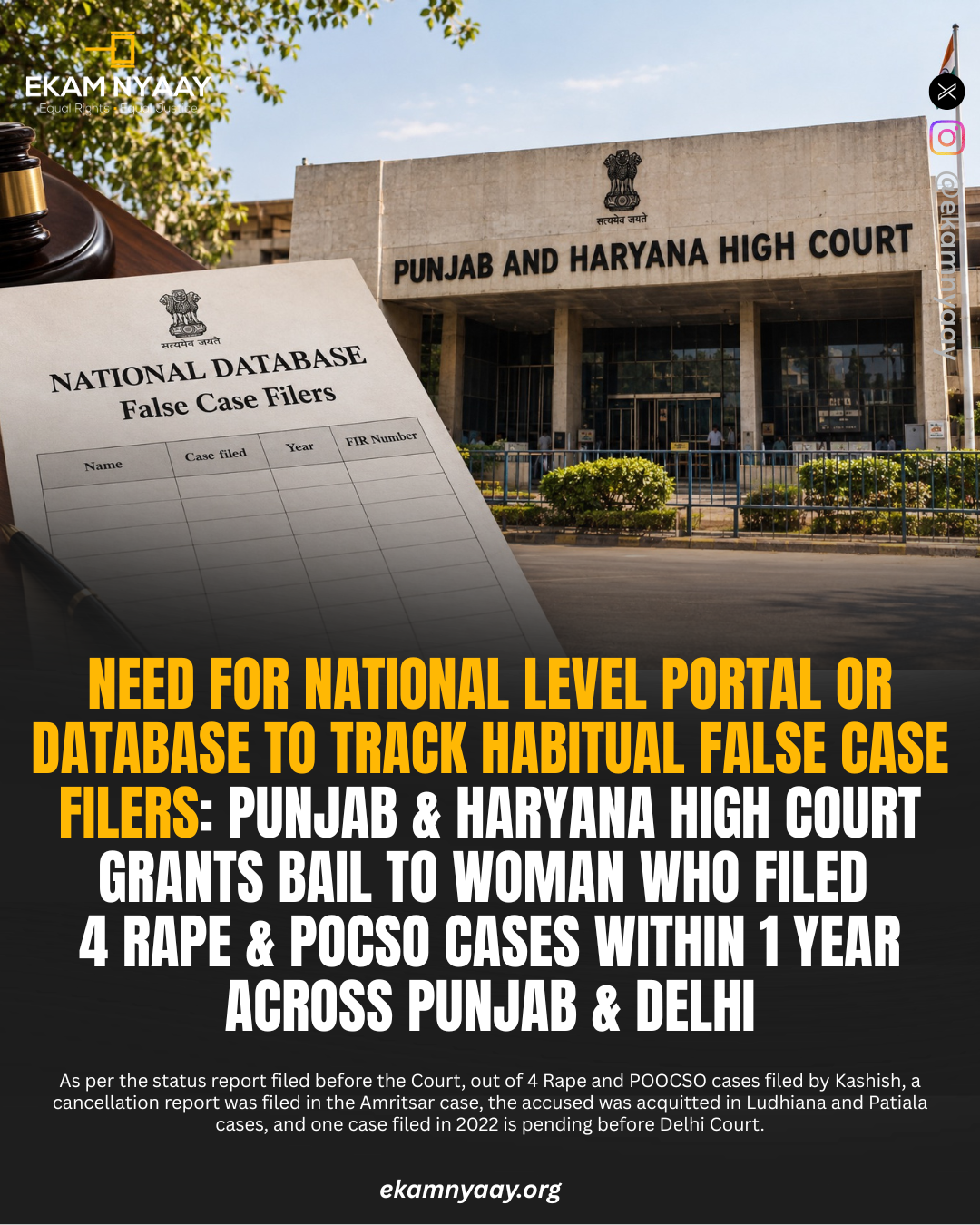
Need For National-Level Portal Or Database To Track Habitual False Case Filers: Punjab & Haryana High Court. Grants Bail To Woman Who Filed 4 Rape & POCSO Cases Within 1 Year Across Punjab & Delhi.
In Kashish Uppal @ Sofia Uppal v. State of Punjab, the Punjab and Haryana High Court granted bail to a woman who filed 4 false rape and POCSO cases with the ulterior motive of extorting money and has been charged with criminal conspiracy, false information, extortion, cheating and forgery.
The case arose from an investigation conducted by AIG, Crime Zone, Amritsar. According to the prosecution, co-accused Veronika @ Divyanshi Kanwar, in connivance with the petitioner, got multiple rape cases registered in Punjab and Delhi to extort money.
As per the status report filed before the Court, out of 4 cases filed by Kashish, a cancellation report was filed in the Amritsar case, the accused was acquitted in Ludhiana and Patiala cases, and one case filed in 2022 is pending before Delhi Court.
The petitioner was arrested and had been in custody since 13.03.2024, she had undergone two years and five months of custody.
While allowing the bail application, High Court held, “Keeping in view the fact that petitioner is in custody since 13.03.2024 and has already undergone incarceration for a substantial period of about 02 years and 05 months;” along with the other circumstances, “this Court is of the considered view that the conclusion of the trial is likely to take considerable time.”
However, High Court also made a significant observation concerning persons who file multiple false cases with ulterior motives. Court observed that the advancement of technology has made information-sharing across jurisdictions easier and stated,
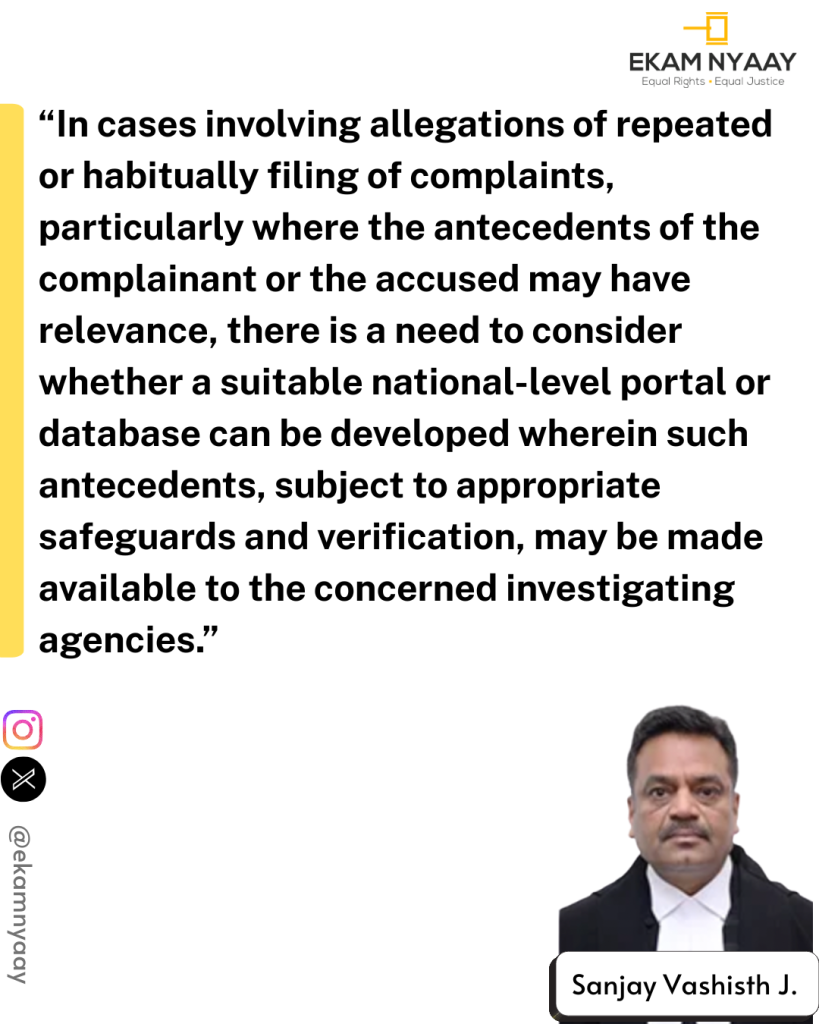
Court suggested that such a mechanism could give investigating agencies prior information about persons involved in repeated proceedings.
Court further explained the purpose of such a national-level database and observed, “Such a mechanism may enable the agencies across the country to have prior information regarding the antecedents of persons involved in repeated proceedings and, wherever legally permissible and relevant, place such information before the competent Court at the appropriate stage.”