-
High Court


Consensual Relationship of 4 years, She was married and had a daughter when affair started, cried rape when he stopped giving Money: Madhya Pradesh HC quashes Rape on the False Promise of Marriage Case.
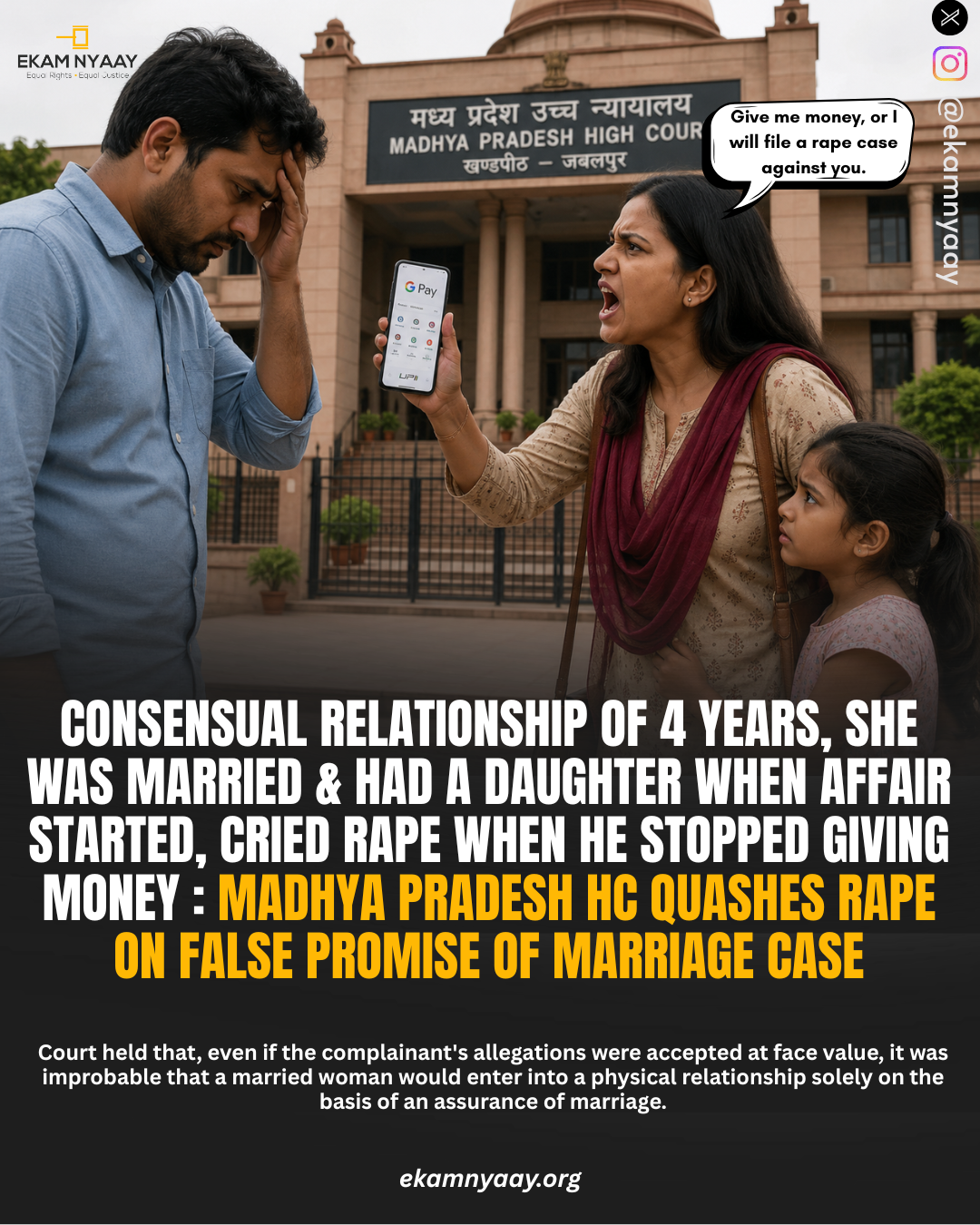
In SK v. State of Madhya Pradesh & Ors., MP High Court quashed a rape case based on the alleged false promise of marriage filed against a Central Government employee by his colleague, who was a married woman and mother of a 9-year-old daughter.
The complainant alleged that accused had established physical relations with her from 20 October 2020 to 30 March 2024 on the false promise of marriage. She further alleged that he had initially raped her after making her unconscious by offering her an orange drink. Consequently, an FIR was registered u/s 376(2)(n), 342, 294, and 506 IPC.
The accused contended that allegations were false and motivated. He argued that complainant was already married and had never obtained a divorce from her husband, making any promise of marriage legally impossible. He further pointed out that FIR was lodged after an unexplained delay of nearly 4 years.
The petitioner also relied on WhatsApp chats to show that prosecutrix herself had proposed a relationship with him. He further produced bank statements and UPI transaction details to demonstrate that she had repeatedly borrowed money from him. According to petitioner, case was filed only after he refused to make further payments.
Court observed that both parties were adults who had remained in a consensual relationship for nearly 4 years. It noted that complainant was admittedly a married woman and mother of a 9-year-old daughter when the relationship began.
Court further stated that complainant had voluntarily continued the relationship for 4 years, admitted that petitioner had never threatened or blackmailed her, and borrowed money from him through bank transfers and UPI transactions.
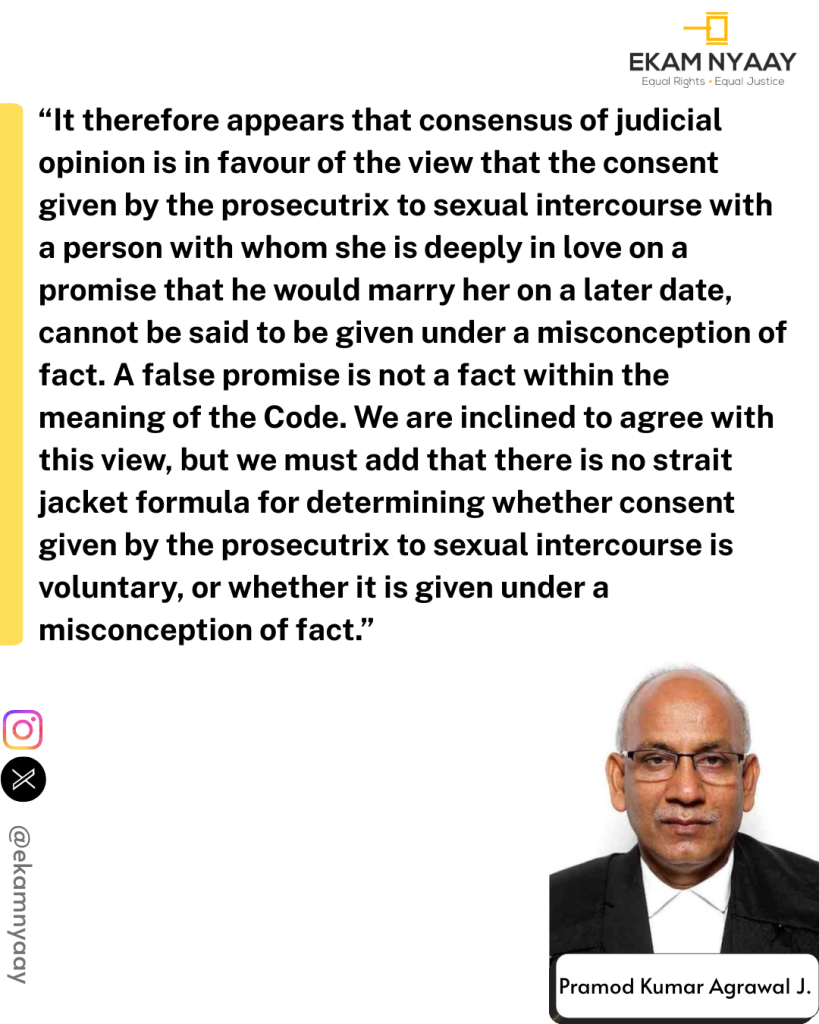
Therefore, High Court held that, even if the complainant's allegations were accepted at face value, it was improbable that a married woman would enter into a physical relationship solely on the basis of an assurance of marriage.
Accordingly, Court concluded that physical relationship between the parties was consensual and could not be characterised as being without the complainant’s consent or against her will.