-
High Court


“ADULTERY ITSELF IS AN ACT OF SECRECY”: MADRAS HC GRANTS DIVORCE TO CRPF CONSTABLE ON GROUNDS OF WIFE’S ADULTERY BASED ON CIRCUMSTANTIAL EVIDENCE
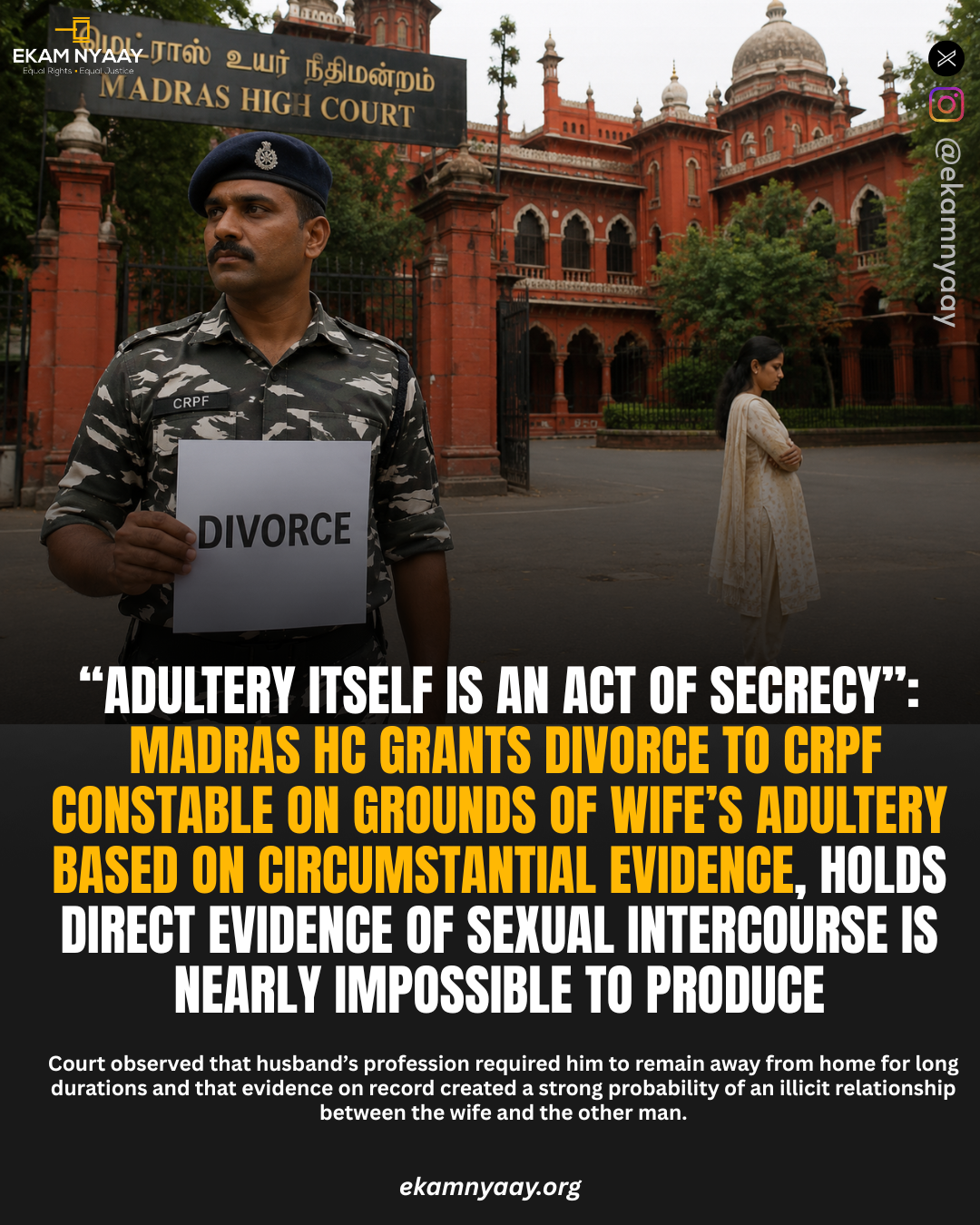
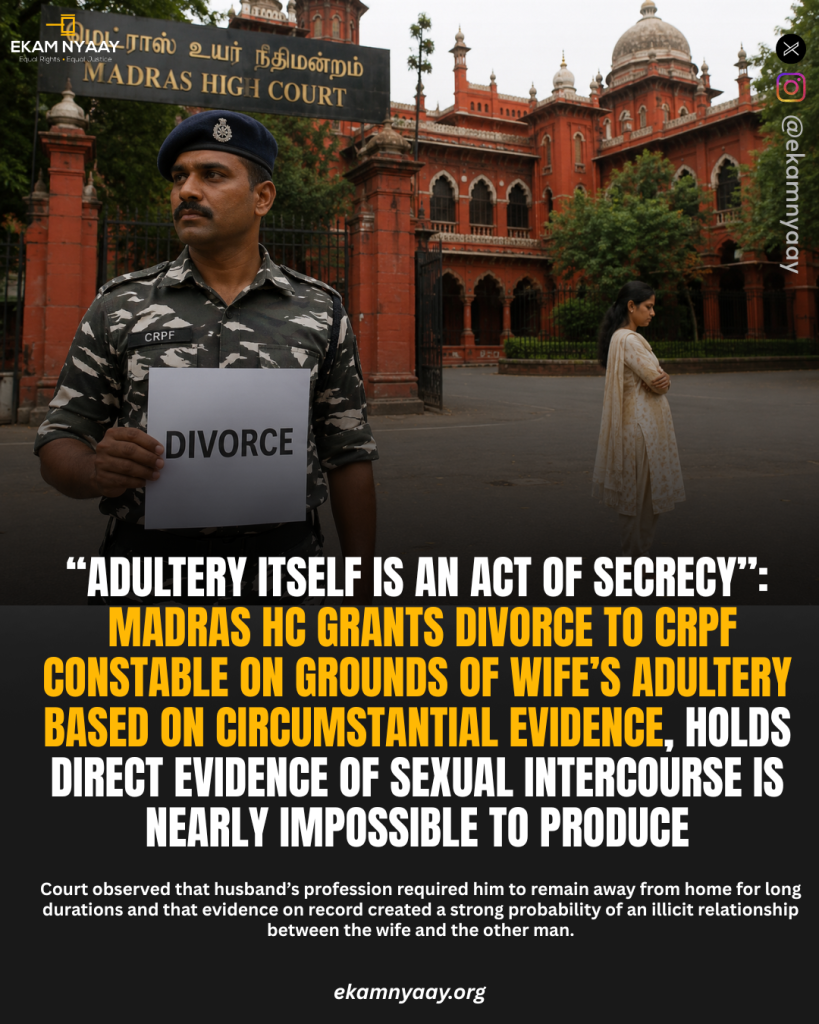
In this case, Madras HC granted divorce to husband on grounds of adultery, observing that direct evidence of sexual intercourse is almost impossible to obtain in cases involving illicit relationships and that adultery is generally proved through surrounding circumstances and conduct of parties.
The husband, a CRPF constable, had married the wife in 2011 and alleged that due to the nature of his service he remained away from home for long periods, visiting only twice a year on leave. He claimed that his wife was not fulfilling her marital obligations and frequent quarrels had taken place between them. He further alleged that she had developed an illicit relationship with another married man from the same village.
The husband relied upon a complaint lodged by alleged paramour’s wife before Women Police Station at Gingee. The complaint accused the man and the wife of maintaining an illicit relationship and alleged that when questioned, the man abused and assaulted his own wife.
Therefore husband sent a legal notice accusing his wife of having an illicit relationship, but she did not send any reply. Based on these allegations, he filed a divorce petition u/s 13(1)(i) of HMA seeking dissolution of marriage on ground of adultery.
The wife denied all allegations and argued that her husband used to stay away because of his CRPF service and in his absence, his relatives harassed her for dowry. She also stated that she had lodged complaints against the husband and his family members.
During the trial, husband produced documentary evidence, including a photograph showing the wife and the other man sitting together in close proximity. Witnesses testified that they had repeatedly seen the two speaking privately in schools and hospitals.
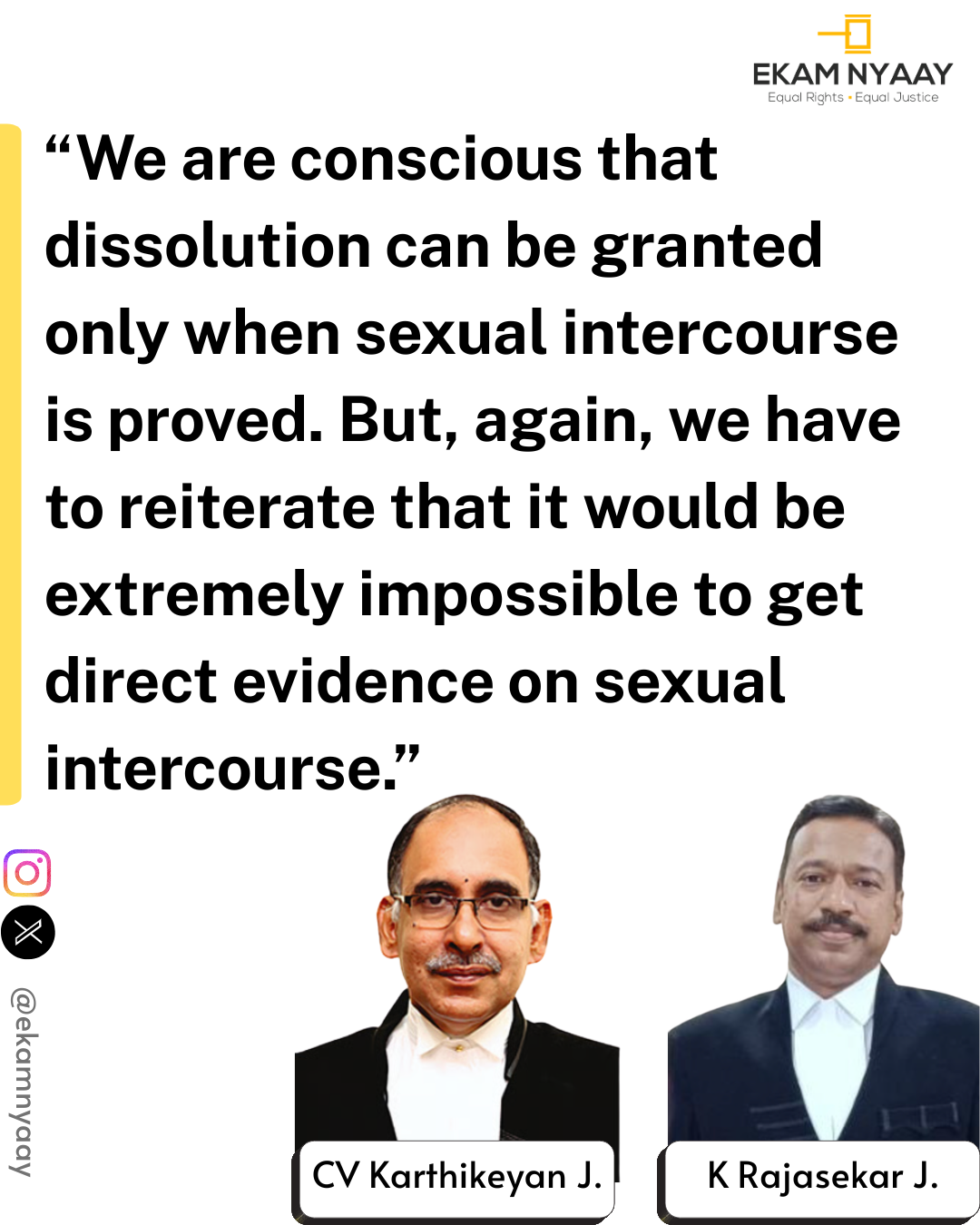
However, the Family Court refused to grant divorce, holding that evidence was insufficient to conclusively prove adultery because no direct evidence of sexual intercourse had been produced. The court observed that mere photographs and evidence of meetings between the two persons could not automatically establish an adulterous relationship.
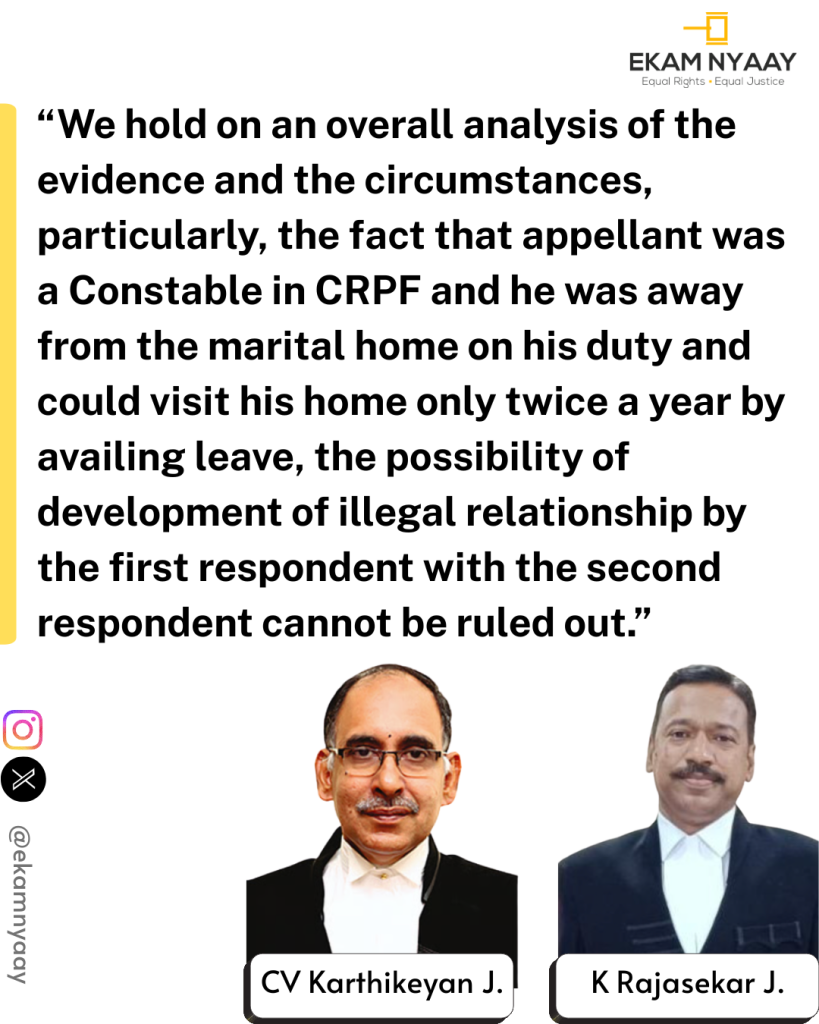
High Court disagreed with this reasoning and held that courts cannot expect direct proof of sexual intercourse in adultery cases because such acts are committed secretly. It emphasized that circumstantial evidence, conduct, and surrounding facts must be evaluated collectively.
Court observed that husband’s profession required him to remain away from home for long durations and that evidence on record created a strong probability of an illicit relationship between the wife and the other man.
Accordingly, HC allowed the appeal and granted divorce to husband u/s 13(1)(i) of HMA