-
Blogs

Judge Vivekanand Sharan Tripathi – Beacon Of Hope For The Falsely Accused And A Force Against False Rape Cases
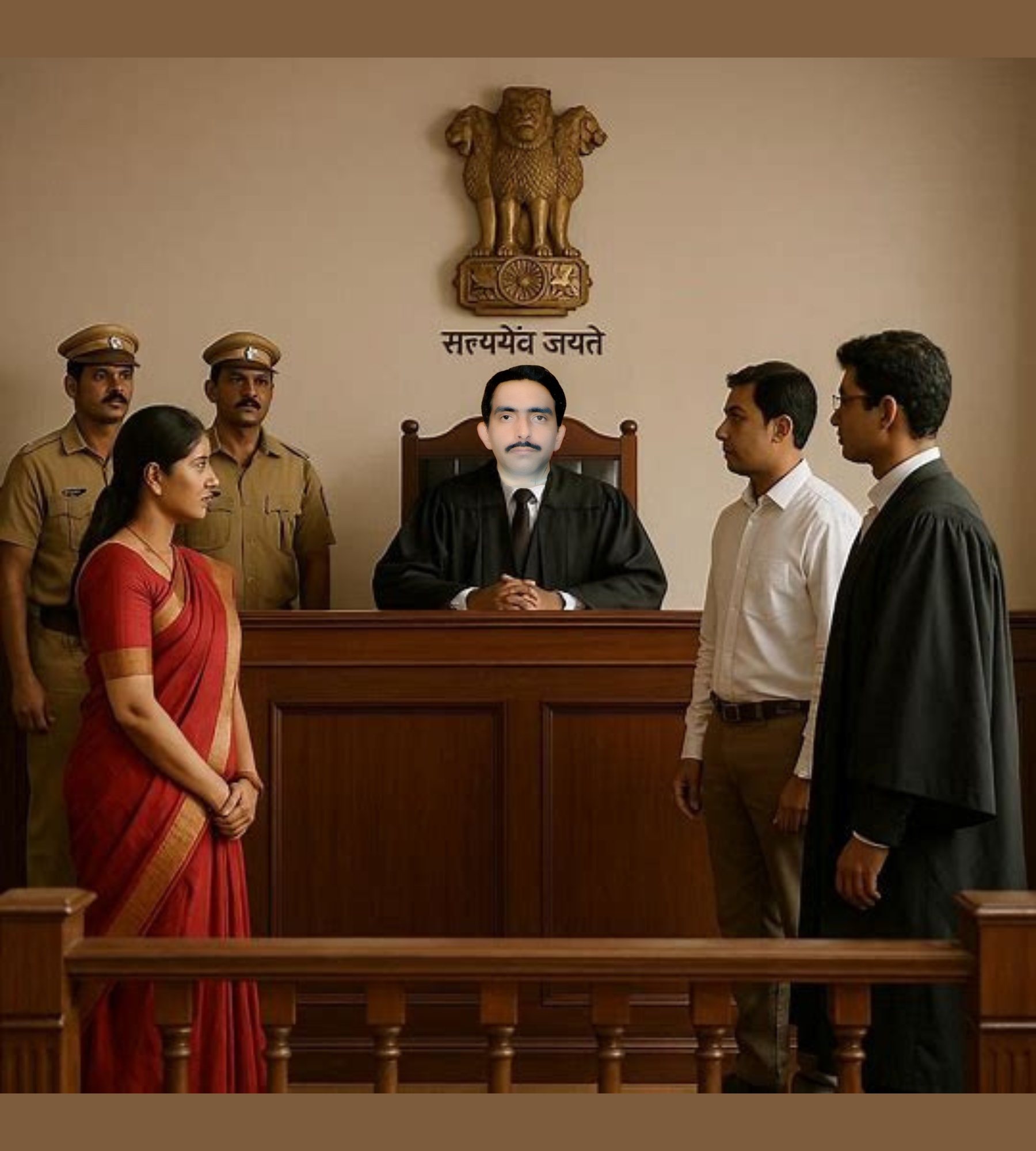
Shri Vivekanand Sharan Tripathi, born on 03 July 1971, has dedicated over two decades of his life to the service of justice. He entered the Uttar Pradesh Judicial Services on 26 February 2004, starting his career as an Additional Civil Judge (Junior Division) at Azamgarh. Over the years, he has built a reputation for being a fair, courageous, and uncompromising judge who does not shy away from calling out misuse of the law.
On 21 January 2025, he was appointed as the Special Judge (SC/ST Prevention of Atrocities Act), Lucknow. Since assuming this role, Judge Tripathi has delivered a series of landmark rulings that have not only punished wrongdoers but also sent out a strong message against the growing menace of false rape and false SC/ST cases.
What sets him apart is his empathetic recognition of the trauma faced by the falsely accused. In multiple judgments, he has emphasized that false allegations do not just end with an acquittal, they scar the individual, destroy families, ruin reputations, and in some cases, even cost lives.
For countless men and families, Judge Tripathi has emerged as a beacon of hope, someone who upholds the principle that justice must be blind to gender and that the law cannot be weaponized as a tool of personal vengeance.
Case 1 – July 2025 | State v. Rekha Devi
In July 2025, Judge Vivekanand Sharan Tripathi delivered a powerful ruling in State v. Rekha Devi, convicting a 24-year-old woman who had falsely implicated two men in a gang rape case coupled with charges under the SC/ST Act.
Punishment Awarded
- Sentence: 7.5 years’ imprisonment
- Fine: ₹2.1 lakh imposed on Rekha Devi
- Conviction Under: Sections 182 and 211 IPC
Background
Rekha Devi, who had an illicit relationship with one of the accused, Rajesh, lodged a false gang rape and SC/ST complaint against Rajesh and co-accused, Bhupendra. The false case was aimed at taking revenge on Rajesh and humiliating his wife. Both men were arrested, and their lives were upended by the fabricated charges.
Tragically, during the pendency of the trial, Bhupendra (29 years) passed away on 03 July 2024, raising the question of whether the social stigma and psychological trauma of the false case contributed to his untimely death.
Observations by the Court
In a detailed 42-page judgment, Judge Tripathi did not merely convict the false complainant, but also highlighted the psychological, social, and economic consequences of false rape allegations.
He noted:
“Being falsely accused of rape has a permanent negative impact on a man's personality and mental health… It can lead to anxiety, depression and isolation. These effects can affect his behavioural thinking in such a way that his social relationships can be affected and his self-esteem can be damaged. He can feel socially isolated and his employment opportunities can also be adversely affected due to legal and judicial proceedings.”
Judge Tripathi described the accused men as “Most lucky false gang rape case survivors”, pointing out that though one of them did not live to see the end of the trial, they were fortunate enough that the truth eventually came out.
He further stressed that the character assassination and public humiliation caused by false rape allegations are irreparable. The stigma remains with the accused and their families long after legal acquittal.
Wider Significance
This judgment was not just about punishing Rekha Devi. It carried a strong deterrent message to others who misuse rape and SC/ST provisions as tools for revenge or extortion. By recognising the human cost borne by the accused and their families, Judge Tripathi underlined the urgent need for systemic safeguards against false cases.Case 2 – May 2025 | Advocate Lakhan Singh
Case 2 – May 2025 | State v. Advocate Lakhan Singh
In May 2025, Judge Vivekanand Sharan Tripathi delivered another landmark ruling, this time against an Advocate who had abused his position and knowledge of law to harass innocent citizens.
Punishment Awarded
- Sentence: 10 years and 6 months’ imprisonment
- Fine: ₹2.51 lakh
- Conviction Under: Sections 182 (false information), 193 (false evidence), and 211 (false charge with intent to injure) of the Bharatiya Nyaya Sanhita (BNS)
Background
The accused, Advocate Lakhan Singh, was found guilty of lodging around 20 false cases under the SC/ST (Prevention of Atrocities) Act. His victims included private individuals, government officials, journalists, and even police personnel, all of whom were dragged into years of unnecessary legal battles due to his malicious FIRs.
Instead of acting as an officer of the court with a duty to uphold truth, Lakhan Singh used his legal acumen to weaponise protective provisions for his personal gains and vendettas.
Observations by the Court
Judge Tripathi observed,
“Instead of upholding the dignity of his profession, the accused used his legal knowledge to manipulate the system. He tarnished the credibility of the judiciary and brought disrepute to the legal fraternity.”
He emphasized that such conduct directly attacks the foundations of criminal jurisprudence, reminding the court of the principle that:
“It is better to let a hundred guilty go free than to punish one innocent person.”
Wider Significance
The conviction of Advocate Lakhan Singh carried far greater weight than an ordinary criminal case. By sentencing a practicing lawyer who had turned the law into a tool of harassment, Judge Tripathi reinforced that legal professionals cannot be allowed to erode the very foundations of justice. His ruling struck at the heart of a disturbing trend where protective legislations, especially the SC/ST Act, are misused not by vulnerable citizens but by those with legal knowledge and professional influence.
Case 3 – August 2025 | State v. Advocate Parmanand Gupta
In August 2025, Judge Tripathi once again demonstrated his judicial resolve by awarding life imprisonment to Advocate Parmanand Gupta, who had orchestrated a long-running conspiracy of false rape and SC/ST cases.
Punishment Awarded
- Sentence: Life imprisonment under Section 3(2)(5) SC/ST Act
- Additional Sentences:
- 1 year under Section 217 BNS
- 10 years under Section 248 BNS
- Fine: ₹5.1 lakh
- Order: Sentences to run separately.
Background
The case originated from a property dispute between Gupta and his neighbours, Arvind Yadav and Awadhesh Yadav, residents of Gomti Nagar, Lucknow.
Gupta’s wife, Sangeeta, ran a beauty parlour where she employed Pooja Rawat, a Dalit woman. Gupta manipulated Rawat into filing a series of false FIRs , nearly 12 in total, accusing his opponents of rape and atrocities under the SC/ST Act.
The conspiracy was exposed when the Allahabad High Court, while hearing a quashing plea in one of Rawat’s rape FIRs, noticed a disturbing pattern of multiple similar cases filed by her. The Court ordered a CBI probe, which confirmed that Rawat had filed 11 FIRs, all through Advocate Parmanand Gupta, who had also filed 18 other related cases.
During the trial, Pooka Rawat turned approver and admitted:
“I was misled and used by Advocate Gupta in lodging fake cases against his neighbours Arvind Yadav and Awadhesh Yadav.”
Observations by the Court
Judge Tripathi held that Gupta had abused the legal system to settle personal enmities, weaponizing a Dalit woman’s identity for his own gain. He warned:
“If courts do not stop advocates like Gupta from practicing law, public faith in the judiciary will be seriously eroded. A convicted criminal like Gupta must not be allowed inside court premises, so that the purity of the judiciary is maintained.”
Wider Significance
The life sentence awarded to Advocate Parmanand Gupta was one of the strongest judicial responses against the institutionalized misuse of law. This was not a case of a single false FIR, it was a carefully orchestrated conspiracy, with over a dozen fabricated cases filed to harass neighbours and extort money. Judge Tripathi’s ruling underscored that when false cases are industrialized into a racket, the damage extends beyond individuals to the credibility of the justice system itself.
By ordering consecutive sentences and declaring that a convicted lawyer like Gupta should never be allowed inside a court premise again, Judge Tripathi sent a historic signal: that those who corrupt the legal process from within will be treated as enemies of justice.
Ekam Nyaay Foundation’s Open Letter (July 2025)
Following Judge Tripathi’s landmark ruling in State v. Rekha Devi, Ekam Nyaay Foundation, through by its founder Smt. Deepika Narayan Bhardwaj, sent an open letter of appreciation to him. The letter acknowledged not only the courage it takes to convict a false complainant in a sensitive rape and SC/ST case but also the larger significance of such a verdict in restoring faith in justice.
As we expressed in our letter to him:
“Your judgment is not only a rare and courageous reaffirmation of the principle that justice must be blind to gender, but also a much-needed beacon of hope for countless innocent men and families across this nation whose lives are shattered by false accusations.”
The Foundation stressed that Judge Tripathi’s ruling gave renewed strength to families across India battling the trauma of false cases, and it mirrored what they hear from men during counselling that they live as “socially dead persons” isolated, humiliated, and devastated by legal misuse.
The letter further commended Judge Tripathi’s recommendations, especially the need for police to record a complainant’s history of prior FIRs and for monetary compensation to the victims be disbursed only after the filing of a chargesheet. These safeguards, if adopted widely, would go a long way in curbing the menace of repeated false cases.
In the end, the letter described the verdict as both a judicial precedent and a moral victory, a reminder that the judiciary remains the ultimate guardian of truth and fairness in India.
A Deterrent Against Misuse, A Shield for the Innocent
The judgments of Judge Vivekanand Sharan Tripathi are more than isolated legal decisions, they are milestones in the fight against the menace of false cases. By punishing those who attempt to weaponize rape and SC/ST laws, he has shown that justice cannot be tilted by gender or professional influence. His rulings also recognize the invisible victims of false cases - men who carry the stigma of false accusations, families torn apart, and even lives lost under the weight of fabricated charges.
At Ekam Nyaay Foundation, we have long believed that if judicial officers across India begin punishing those who misuse protective laws, it will serve as a powerful deterrent. False cases not only destroy innocent lives but also delay justice for genuine victims, overburdening courts and eroding public faith in the system. Judges like Vivekanand Sharan Tripathi are proof that the judiciary can stand tall, safeguard truth, and restore balance.
To every man and family currently fighting a false case, our message is clear: Do not lose hope. Fight with sincerity, hold on to your truth, and justice shall prevail. The courage of judges like Shri Vivekanand Sharan Tripathi ensures that the scales of justice, though sometimes delayed, will ultimately tip in favor of the innocent.
Author - Harsh Asija