
-
Blogs


Intimacy as Leverage: Dating Scams and Honeytraps Exploiting Men in India
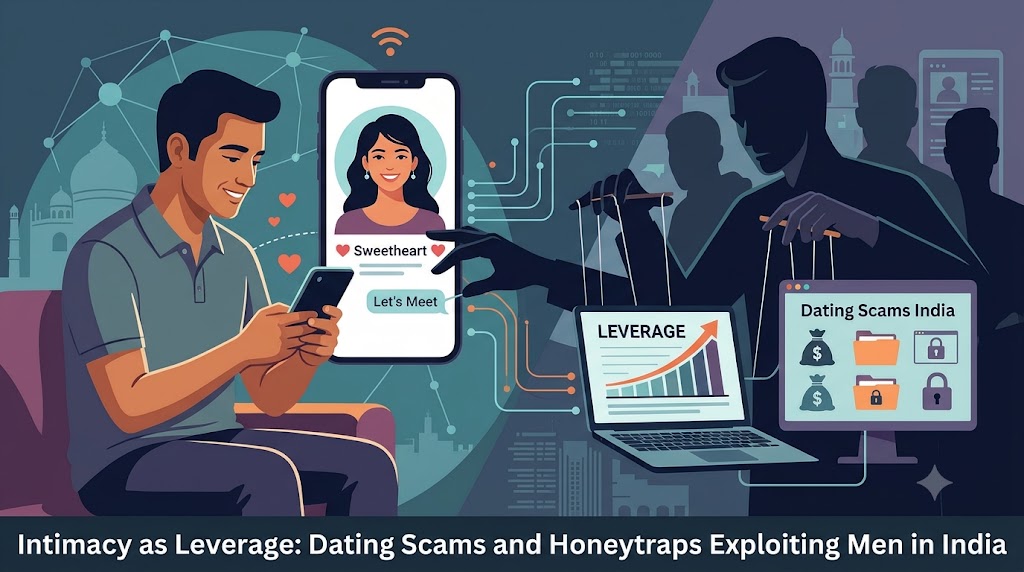
A Systemic Pattern Beyond Coincidence
Across India, a deeply troubling pattern has been emerging—one that is visible in scattered news reports, police investigations, and silent personal experiences, yet rarely acknowledged in its full scale. Men are increasingly being drawn into interactions that begin with digital flirtation, warmth, and emotional engagement, only to end in coercion, extortion, and fear. What starts on platforms like Tinder or Bumble quickly escalates into a form of connection that feels genuine, only to abruptly transform into a situation of control. Official data from the National Crime Records Bureau and various state cyber cells confirms a sharp rise in cyber-enabled frauds and sextortion cases in recent years, with financial losses running into thousands of crores. While exact figures vary across sources, what remains consistent is the acknowledgement by authorities that such crimes are growing rapidly and that a significant portion goes unreported due to stigma, fear, and reputational concerns. What is visible in official records is therefore only a fraction of a much larger, largely hidden reality.
From Isolated Incidents to Organized Operations
The nature of these crimes has evolved significantly. What were once isolated honeytrap incidents dependent on physical setups have now transformed into organized, scalable operations. Investigations and enforcement actions across cities such as Mumbai, Delhi, Pune, and Ahmedabad reveal a recurring structure: fake digital identities are used to initiate contact, emotional engagement is rapidly established, and victims are then led into controlled environments where compromise can be created. A widely discussed sting operation by Dainik Bhaskar exposed how such honeytraps can operate in a structured manner, with roles assigned for initiating contact, building rapport, arranging meetings, and executing extortion. In Mumbai, police have documented cases where men were lured through dating apps to specific venues, only to face inflated bills and intimidation.
In Delhi, investigations have uncovered instances where multiple complaints were allegedly used to pressure individuals into financial settlements. A case from Worli involving an elderly victim reportedly defrauded of a very large sum illustrates how these schemes can extend over time, combining emotional manipulation with financial extraction. These cases, taken together, demonstrate that the interaction is not accidental—it is designed toward a predictable outcome.
Platform Mechanics: Where Trust Is Created Faster Than It Can Be Tested
Digital platforms have fundamentally altered the nature of human interaction. Applications such as Instagram and dating platforms enable rapid connection between strangers, but they also remove traditional layers of verification. Profiles can be curated, identities constructed, and narratives tailored to evoke trust. The interaction typically follows a pattern: initial contact is friendly and engaging, conversations quickly become personal, and within a short span, emotional or even intimate communication begins. The shift to private messaging platforms reduces oversight and increases control. In many reported cases, victims are then encouraged to meet in specific locations like bars, hotels, or private spaces where the environment is already set up to facilitate the next stage of the scheme. What appears to the victim as a spontaneous meeting is often a pre-arranged setting designed to create leverage, whether through manipulated billing, staged situations, or recording of compromising material.
Vulnerable Targets: Where Financial Stability Meets Emotional Isolation
Patterns across cases show that targeting is deliberate. Professionals, NRIs, married men, and individuals with stable incomes are frequently targeted due to their financial capacity and reputational exposure. A particularly vulnerable group consists of retired individuals, widowers, and those living alone after separation. These individuals often possess financial resources such as pensions, savings, or gratuity, while also experiencing emotional isolation. The success of these schemes lies not in force, but in psychological precision. They exploit fundamental human needs—connection, validation, and intimacy. Men who are socially isolated, emotionally disconnected, recently separated, or living alone are particularly vulnerable. In such cases, the approach is slower and more sophisticated. Trust is built over time, conversations become routine, and emotional dependence develops. The eventual exploitation is therefore not only financial but deeply psychological. The victim is not just losing money but also he is losing something that felt like companionship. This makes disengagement difficult and increases the likelihood of repeated compliance.
The Turning Point: When Connection Becomes Coercion
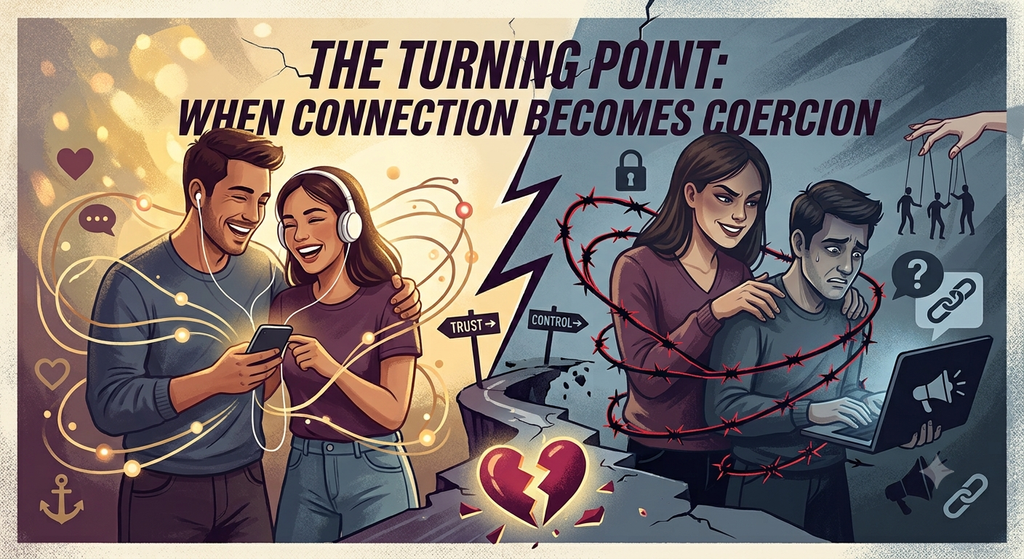
The defining moment in these cases is the sudden shift from engagement to threat after a situation has been created that gives the other side leverage—when the interaction has crossed into a space of vulnerability. It may arise after a private meeting in a controlled location, after an intimate video call, after the sharing of personal or sensitive information, or after emotional dependence has been established to a degree where withdrawal itself becomes difficult. In many cases, the victim does not realise that this moment has been deliberately engineered until it has already passed.
What was once a source of comfort becomes a source of pressure. Victims are confronted with demands backed by threats of exposure, reputational harm, or legal consequences. This may involve edited images, recorded interactions, inflated bills, or fabricated allegations. At this stage, the victim is not evaluating the legality of the threat; he is responding to its perceived consequences. The fear of social stigma, family disruption, and professional damage becomes overwhelming, and compliance appears to be the safest option. The coercion works not because the threat is always valid, but because the risk of resisting feels too high.
Legal Pressure and Perception: When Fear Becomes Leverage
The legal system is designed to protect individuals, particularly in sensitive matters, and that protection is essential. However, in these scenarios, the perception of legal consequences plays a crucial role. Allegations relating to personal conduct carry immediate social stigma and potential legal implications. Even the suggestion of a complaint can create significant pressure. For the individual, the concern is not what the law ultimately decides, but what might happen immediately—police involvement, arrest, social exposure, and prolonged legal stress. This gap between legal principle and perceived consequence becomes a critical point of exploitation.
Consequences for Men: Psychological, Financial, and Social Impact
The consequences of these incidents extend far beyond financial loss. Victims often experience severe psychological distress, including anxiety, fear, and loss of confidence. Many withdraw from social interactions and develop a deep mistrust of relationships. Financially, losses can be substantial and sometimes repeated, as victims are pressured into making multiple payments. Socially, the fear of exposure can affect professional standing and personal relationships. The impact is not temporary—it alters behaviour, perception, and emotional well- being in lasting ways.
Impact on Families: The Silent and Often Hidden Fallout
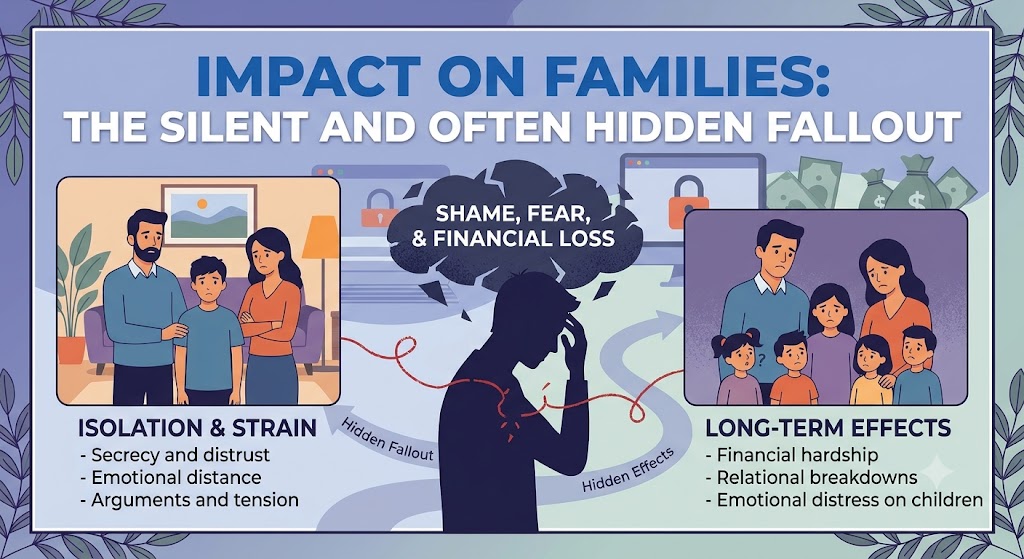
The effects of such incidents extend deeply into the family. Financial losses can disrupt household stability, savings, and long-term planning. Emotional strain arises as family members sense distress but may not fully understand its cause. Trust within relationships may be affected, leading to tension and conflict. In many cases, the victim does not disclose the full extent of the situation, creating an environment of silence and confusion. The family, therefore, becomes an indirect victim, experiencing the consequences without complete visibility. The combined effect of financial, emotional, and social stress creates a situation where the damage is not only immediate but prolonged and cumulative.
Broader Societal Impact: Erosion of Trust and Changing Interactions
As such incidents become more widespread, they begin to influence societal behaviour. Men become more cautious in their interactions, particularly in digital spaces. Genuine expressions of interest may be viewed with suspicion, and emotional openness may decline. While caution is necessary, there is a risk of over-generalisation, where isolated patterns lead to broader mistrust. This can distort interactions between men and women, making them more guarded and transactional. Over time, this shift affects the fabric of social relationships, where trust becomes conditional and connection becomes more difficult to establish.
Gaps in Response: Why the Problem Persists
Several systemic gaps allow these schemes to continue. Social stigma discourages victims from reporting, reducing accountability. Law enforcement agencies may face challenges in early detection, digital evidence collection, and inter-state coordination. The rapid evolution of these schemes often outpaces investigative capabilities. Additionally, the perception of immediate consequences from allegations creates a pressure dynamic that is difficult to counter in real time. These factors combine to create an environment where such schemes can operate with relative efficiency and low risk.
Reforms and the Way Forward: Precision, Balance, and Awareness
Addressing this issue requires a balanced approach that strengthens protection while reducing opportunities for misuse. Legal frameworks must emphasize clear distinctions between consensual interactions and deliberate deception, focusing on intent and evidence. Early-stage scrutiny and evidence-based investigation can help prevent misuse of process. Law enforcement needs enhanced capacity in cybercrime investigation, including digital forensics and financial tracking. Public awareness campaigns can reduce stigma and encourage reporting. Platforms can introduce stronger verification mechanisms to limit fake profiles. Accountability measures for malicious complaints, where proven, can act as a deterrent without undermining genuine cases. The objective is not to weaken protections, but to make them more precise, fair, and resistant to exploitation. The Supreme Court of India, in Arnesh Kumar v. State of Bihar, emphasized that arrests should not be automatic and must follow due scrutiny, precisely to prevent misuse of process. Courts have also observed that criminal law cannot be used as a tool for coercion or recovery.
Prevention: Breaking the Sequence Before It Completes
Prevention begins with awareness. Individuals must recognise patterns such as rapid escalation of intimacy, reluctance to verify identity, and pressure to move interactions off-platform. Verifying profiles through live video interaction, using reverse image searches, and avoiding rushed meetings can reduce risk. At the point of threat, preserving evidence, avoiding payment, and reporting to cybercrime authorities are critical steps. For vulnerable individuals, particularly the elderly or those living alone, involving trusted family members in decisions can provide an additional layer of protection. Prevention is not about avoiding connection, but about maintaining control over the pace and nature of interaction.
Conclusion: Recognising the Pattern Without Losing Trust
The rise of dating scams and honeytrap-based exploitation reflects a convergence of digital opportunity, psychological manipulation, and systemic gaps. It is not merely a series of isolated incidents, but a pattern that requires recognition and response. Addressing it demands awareness, institutional reform, and balanced application of law. At the same time, it is essential to preserve the possibility of genuine human connection because the real challenge is not only to prevent exploitation, but to ensure that trust, intimacy, and relationships themselves are not reduced to spaces of fear and suspicion.
~ Reflections of a falsely accused victim .
More In this segment
-

-
Blogs
- October 2026
The Other Side of Domestic Violence: The Invisible Victims Often Overlooked
-
-
-
Blogs
- September 2026
-
-

-
Blogs
- July 2026
-
-